The field of photonics has witnessed amazing innovations, especially in the growth of various modulators that play essential functions in countless optical applications. Among these, fiber acousto-optic modulators (AOMs) and their lots of variants, such as space AOMs and free-space AOMs, stand out due to their flexibility and efficiency.
Among one of the most desired attributes in laser modern technology is ultra-narrow linewidth, commonly connected with single-frequency lasers. These lasers generate light with an exceptionally narrow spooky width, making them excellent for numerous complex applications, including coherent interaction systems and high-resolution spectroscopy. A fiber-coupled AOM, which incorporates the AOM into a fiber optic system, offers smooth coupling with single-frequency fiber lasers. This integration demonstrates the pattern in the direction of increased compactness and efficacy in optical systems without giving up efficiency.
The energy of fiber optic delay lines can not be overstated, especially in creating advanced optical systems that call for specific timing and synchronization. These delay lines harness the integral homes of optical fibers to manage light signals successfully, allowing scientists and designers to explore high-speed information transmission or intricate timing try outs very little loss of fidelity. The electric optical fiber delay line works as a main element in this context, helping with the adjustment of light signals to fit specific demands.
Explore free space aom the most recent innovations in photonics, concentrating on the critical role of fiber acousto-optic modulators in improving laser applications, telecommunications, and precision optical systems for varied sectors.
Modulators are vital in laser systems, playing a vital role in changing constant wave outputs into pulse formats. Acousto-optic Q-switch modulators serve this specific function, allowing quick modulation of laser results, which results in high-peak power pulses.
Furthermore, the distinction in between acousto-optic buttons and modulators is a critical element of comprehending how these devices function in various situations. Acousto-optic switches efficiently redirect light beams, thus making it possible for different transmitting performances within optical systems. In contrast, a modulator readjusts the light’s homes, straight impacting the beam’s characteristics. This distinction marks their respective roles in laser systems and highlights the variety of applications each device satisfies.
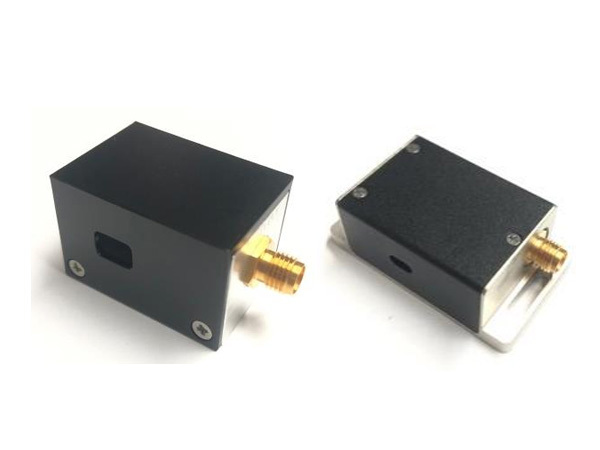
Acousto-optic devices have actually progressively gotten grip in the market, driven by the rising demand for advanced optical innovations. The acousto-optic modulator market is experiencing considerable growth due to applications in telecoms, armed forces systems, and industrial manufacturing.
The qualities of narrow linewidth laser resources are fundamental to certain applications, where coherence and accuracy are extremely important. Narrow linewidth fiber lasers exhibit steady exhaust with minimal spectral spread, catering to applications in fiber-optic communications and picking up innovations. These top qualities are essential when dealing with long-distance data transmission, where signal degradation can dramatically impact the high quality of info obtained. Combining these fibers with advanced modulators enables scientists to check out brand-new frontiers in optical interaction systems.
Acoustic optical deflectors contribute to the flexibility of optical systems, supplying a means to adjust light dynamically and effectively by utilizing acoustic waves as the managing mechanism. Such devices can be discovered in various applications, from laser scanning systems to advanced imaging techniques. By using the concepts of acousto-optics, these deflectors help in accomplishing quick and specific modifications in the beam’s trajectory without the need for intricate mechanical components.
In discovering the kinds of pulse modulation, one understands the details and variety intrinsic in the field. Pulse modulation methods, such as pulse-width modulation (PWM) and pulse-position modulation (PPM), allow adjustment of light based upon discharge to create differing signal types. These methods promote developments in electronic devices and photonics, from regulating laser outputs to boosting the efficiency of fiber optic systems.
Additional factor to consider of optical passive components exposes their important role in enhancing system dependability. Their payment to general system efficiency is vital, mostly when incorporated with modulators and various other dynamic optical devices.
The expanding emphasis on space applications emphasizes the demand for robust and trustworthy optical systems that can function effectively in extreme problems. Space acousto-optic modulators, specifically, suit the one-of-a-kind requirements of space goals, where aspects such as radiation exposure and temperature fluctuations can substantially impact performance. The advancement of space-grade acousto-optic devices guarantees that interaction and data collection remain continuous in the rough atmospheres of space.
Acousto-optic Q-switching represents among the most effective approaches of producing high-energy pulses, essential for applications ranging from laser noting to clinical procedures. The modulation capacities fundamental in AOMs permit them to adapt to differing requirements, maximizing pulse duration and energy result. Subsequently, they give an innovative pathway to elevate laser applications across diverse areas.
As we delve further into the future of photonics, it comes to be significantly clear that innovation in laser modulators and acousto-optic modern technologies is critical. The advancements in modulator drivers enhance the performance with which AOMs and EOMs run, enabling faster and a lot more trusted performance. The crossover between developments in modulation and the boosting need for greater transmission capacity and lower latency in interaction systems suggests a future rich with possibilities for reinforced optical communications.
Recognizing the basic technicians that underpin acoustic optical modulators will certainly result in exceptional design and performance enhancements as study remains to grow. The exploration of new products, integrations, and strategies in areas like micro-nano manufacture will likely produce devices with even better control and expanded operational lifetimes. These advancements not only guarantee enhanced functionality for existing systems but welcome totally brand-new applications within arising technologies in quantum computing, robotics, and progressed production.
In recap, the domain name of acousto-optic modulators and relevant fiber-optic innovations personifies quick progress and complexity, acting as fundamental aspects within several modern optical applications. With the growing demand for precision and high performance in numerous sectors, the growth of acousto-optic devices, such as fiber AOMs, continues to evolve, adapting to new obstacles and chances. As scientists and engineers press the boundaries of technology, these devices will continue to be main to forming the future of optical interaction, laser applications, and past, proclaiming a new period of technical advancement.
No Responses