
How RevOps Agencies Improve Marketing ROI and EfficiencyHow RevOps Agencies Improve Marketing ROI and Efficiency
Introduction
Marketing teams are under constant pressure to generate more leads, improve conversion rates, and prove return on investment. However, in many organizations, marketing performance is limited not by effort but by misalignment, poor data quality, and disconnected revenue systems.
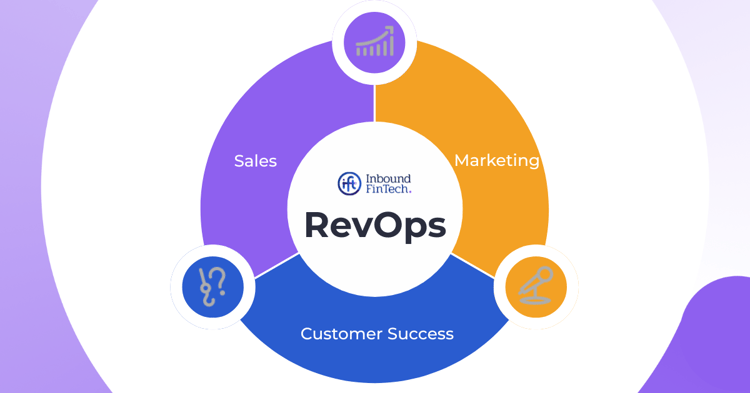
A RevOps agency helps solve these challenges by aligning marketing with sales and customer success, ensuring that every marketing activity contributes directly to revenue. Instead of working in isolation, marketing becomes part of a unified revenue engine. One example of a specialized provider in this space is elefante RevOps, which focuses on building structured revenue operations systems that improve marketing efficiency and ROI.
Why Marketing ROI Is Often Low in Many Businesses
Marketing ROI often suffers when campaigns generate leads that do not convert into paying customers. This usually happens due to poor targeting, weak lead qualification, or lack of alignment with sales.
Another major issue is the inability to track the full customer journey. Without proper data integration, marketing teams cannot clearly see which campaigns actually generate revenue.
A RevOps agency addresses these issues by connecting marketing data with sales outcomes, allowing businesses to measure true ROI instead of just surface-level metrics.
Aligning Marketing with Revenue Goals
One of the most important ways a RevOps agency improves marketing efficiency is by aligning marketing goals with overall revenue objectives.
Instead of focusing only on impressions, clicks, or leads, marketing teams begin to focus on revenue-based KPIs such as customer acquisition cost, pipeline contribution, and conversion rates.
This alignment ensures that marketing efforts are directly tied to business outcomes, improving both efficiency and accountability.
Improving Lead Quality and Targeting
Low-quality leads are one of the biggest reasons for poor marketing ROI. When marketing attracts the wrong audience, sales teams waste time and resources trying to convert unqualified prospects.
A RevOps agency improves lead quality by refining targeting strategies and ensuring proper alignment between marketing and sales on what defines a qualified lead.
This leads to higher conversion rates and more efficient use of marketing budgets.
Enhancing Lead Scoring Systems
Lead scoring plays a critical role in determining which prospects are most likely to convert. However, many companies use outdated or inconsistent scoring models.
A RevOps agency develops data-driven lead scoring systems that evaluate prospects based on behavior, engagement, and fit.
This ensures that marketing delivers high-quality leads to sales, improving overall efficiency and ROI.
Connecting Marketing Data with Sales Outcomes
One of the biggest challenges in marketing performance tracking is the disconnect between marketing data and actual sales results.
A RevOps agency integrates marketing platforms with CRM and sales systems, allowing businesses to track the full journey from first touch to closed deal.
This end-to-end visibility enables companies to understand which campaigns generate real revenue, not just leads.
Optimizing Marketing Technology Stacks
Many organizations use multiple marketing tools that are not properly integrated. This creates data silos and reduces efficiency.
A RevOps agency evaluates and optimizes the entire marketing technology stack to ensure all tools work together seamlessly.
This integration improves data accuracy, reduces manual work, and enhances campaign performance tracking.
Improving Campaign Tracking and Attribution
Without proper attribution, it is difficult to determine which marketing channels are most effective.
A RevOps agency implements advanced attribution models that track every touchpoint in the customer journey.
This allows businesses to understand which campaigns drive conversions and allocate budgets more effectively.
Increasing Conversion Rates Through Better Alignment
Marketing ROI is not just about generating leads—it is about converting those leads into customers.
A RevOps agency improves conversion rates by ensuring smooth handoffs between marketing and sales. This includes standardized processes, clear qualification criteria, and real-time communication between teams.
Better alignment leads to higher conversion rates and improved marketing efficiency.
Reducing Wasted Marketing Spend
Inefficient targeting, poor data, and misaligned teams often lead to wasted marketing budgets.
A RevOps agency helps eliminate waste by focusing marketing efforts on high-quality leads and high-performing channels.
This ensures that every marketing dollar contributes directly to revenue growth.
Improving Reporting and Performance Visibility
Many marketing teams struggle to prove ROI because they lack clear reporting systems.
A RevOps agency builds unified dashboards that display real-time marketing performance metrics such as cost per lead, pipeline contribution, and revenue generated.
This visibility allows marketing teams to demonstrate value and make data-driven decisions.
Role of elefante RevOps in Marketing Optimization
elefante RevOps is a specialized RevOps agency that helps businesses improve marketing ROI and efficiency by aligning marketing with revenue operations. Their approach focuses on integrating systems, improving data quality, and building structured marketing-to-sales workflows.
By ensuring that marketing activities are fully connected to revenue outcomes, elefante RevOps enables companies to maximize the impact of their marketing investments.
Enhancing Funnel Efficiency
Marketing efficiency depends on how smoothly leads move through the funnel. Bottlenecks or delays can significantly reduce ROI.
A RevOps agency optimizes the entire funnel by improving lead qualification, speeding up sales handoffs, and ensuring consistent follow-up processes.
This results in a faster and more efficient conversion process.
Strengthening Customer Journey Consistency
Inconsistent messaging across marketing and sales can reduce trust and lower conversion rates.
A RevOps agency ensures that messaging remains consistent throughout the customer journey, from initial marketing touchpoints to final sales conversations.
This improves customer experience and increases the likelihood of conversion.
Improving Budget Allocation Decisions
Marketing teams often struggle with deciding where to allocate budget for maximum impact.
A RevOps agency provides data-driven insights that show which channels and campaigns deliver the highest ROI.
This enables businesses to invest more in high-performing strategies and reduce spending on ineffective ones.
Enabling Scalable Marketing Growth
As businesses grow, marketing operations become more complex. Without proper systems, scaling can lead to inefficiencies and wasted resources.
A RevOps agency builds scalable marketing frameworks that support growth without sacrificing efficiency.
This ensures that marketing performance remains strong even as the business expands.
Conclusion
Marketing ROI and efficiency depend heavily on alignment, data quality, and operational structure. A RevOps agency helps businesses achieve all three by integrating marketing with sales and customer success into a unified revenue system.
From improving lead quality and attribution to optimizing technology stacks and increasing conversion rates, RevOps enhances every aspect of marketing performance.
With expert providers like elefante RevOps, companies can transform their marketing operations into highly efficient, revenue-driven systems.
