
Category: Business

How Does Industrial Manufacturing Pakistan Reduce Waste?How Does Industrial Manufacturing Pakistan Reduce Waste?

Industrial Manufacturing Pakistan plays an important role in supporting the country's economy by producing a wide range of products for local and international markets. From textiles and food processing to chemicals, steel, cement, automotive parts, and electronics, the manufacturing sector contributes significantly to employment, exports, and industrial growth. However, as industries expand, managing waste becomes a major challenge.

Reducing waste is no longer just an environmental responsibility. It has become an essential business strategy that helps manufacturers lower production costs, improve efficiency, conserve natural resources, and strengthen their competitive position. Companies that invest in waste reduction often experience better productivity, improved product quality, and greater customer satisfaction.

Today, Industrial Manufacturing Pakistan is gradually adopting modern production methods, advanced technologies, and sustainable practices to reduce waste throughout the manufacturing process. These improvements not only protect the environment but also create long-term financial benefits for businesses.

This guide explains how manufacturers in Pakistan reduce waste, why waste management is important, and the practical strategies industries use to build more efficient and environmentally responsible operations.

Industrial Waste

Industrial waste includes any unwanted materials generated during manufacturing processes. Waste may appear in different forms, including solid waste, liquid waste, gaseous emissions, defective products, excess packaging, and wasted energy.

Every manufacturing facility produces some level of waste. The goal is not simply to dispose of it but to minimize waste generation from the beginning of production.

Common industrial waste includes:

  • Scrap metal

  • Plastic leftovers

  • Fabric offcuts

  • Chemical residues

  • Wastewater

  • Packaging materials

  • Dust and emissions

  • Broken products

  • Excess raw materials

Reducing these waste streams allows manufacturers to improve operational performance while lowering disposal costs.

Why Waste Reduction Matters

Waste reduction provides benefits that extend beyond environmental protection. Every kilogram of wasted material represents money lost during production.

Manufacturers that reduce waste often experience:

  • Lower operating costs

  • Higher production efficiency

  • Improved product quality

  • Better resource management

  • Reduced environmental impact

  • Greater customer confidence

  • Compliance with environmental regulations

  • Improved workplace safety

For many businesses, reducing waste becomes an investment rather than an expense because savings continue year after year.

Identifying Sources of Manufacturing Waste

Before reducing waste, manufacturers must identify where waste occurs.

Common sources include inefficient production processes, poor inventory management, equipment breakdowns, excessive material handling, employee errors, and outdated machinery.

Many factories perform detailed production audits to identify areas where materials, energy, and time are being wasted.

Once these problems are identified, businesses can implement targeted improvements that reduce waste without slowing production.

Improving Production Planning

One of the simplest ways Industrial Manufacturing Pakistan reduces waste is through better production planning.

Accurate production schedules help manufacturers produce the right quantity of products without unnecessary excess.

Better planning reduces:

  • Overstocking

  • Material shortages

  • Product damage

  • Storage costs

  • Emergency purchasing

  • Production delays

Advanced planning also improves communication between purchasing, production, and warehouse departments.

When every department works together, waste naturally decreases.

Using High-Quality Raw Materials

Poor-quality raw materials often lead to defective products and higher scrap rates.

Manufacturers increasingly work with reliable suppliers who provide consistent material quality.

Although premium materials sometimes cost more initially, they usually reduce:

  • Product defects

  • Machine downtime

  • Rework

  • Material losses

  • Customer complaints

Using quality materials creates smoother production while minimizing unnecessary waste.

Modern Manufacturing Equipment

Old machines often consume more energy, require frequent repairs, and produce inconsistent products.

Many manufacturers invest in modern equipment because newer technology improves precision and reduces production errors.

Modern machines help reduce:

  • Material waste

  • Energy consumption

  • Production delays

  • Equipment failures

  • Maintenance costs

Automation also increases consistency across production lines.

Preventive Equipment Maintenance

Unexpected equipment failures often generate significant waste.

Machines operating below optimal performance may produce defective products or consume excessive raw materials.

Preventive maintenance includes:

  • Regular inspections

  • Cleaning machinery

  • Replacing worn components

  • Lubrication

  • Performance testing

Routine maintenance helps manufacturers avoid expensive breakdowns while reducing unnecessary production losses.

Lean Manufacturing Practices

Lean manufacturing focuses on eliminating activities that do not add value to the final product.

Many companies within Industrial Manufacturing Pakistan are introducing lean principles to improve productivity and reduce waste.

Lean manufacturing identifies several common forms of waste, including:

  • Overproduction

  • Waiting time

  • Excess transportation

  • Unnecessary movement

  • Excess inventory

  • Defective products

  • Overprocessing

Removing these inefficiencies improves both productivity and profitability.

Recycling Manufacturing Materials

Recycling is one of the most effective waste reduction methods.

Instead of discarding leftover materials, manufacturers recycle them whenever possible.

Common recyclable materials include:

  • Steel

  • Aluminum

  • Copper

  • Plastic

  • Cardboard

  • Glass

  • Paper

  • Rubber

Recycling reduces landfill waste while lowering the need for new raw materials.

Many manufacturers also generate additional income by selling recyclable materials.

Reusing Production Materials

Not every leftover material needs recycling.

Many production scraps can be reused directly within manufacturing operations.

Examples include:

  • Reusing packaging materials

  • Reprocessing plastic scrap

  • Melting metal leftovers

  • Reusing pallets

  • Recovering cooling water

  • Reusing containers

Material reuse reduces purchasing costs while supporting sustainable production.

Better Inventory Management

Poor inventory control often leads to expired materials, damaged stock, and unnecessary purchasing.

Modern inventory systems allow manufacturers to monitor stock levels accurately.

Better inventory management reduces:

  • Overstocking

  • Product expiration

  • Warehouse congestion

  • Material deterioration

  • Emergency orders

Accurate inventory also improves cash flow and operational efficiency.

Employee Training and Awareness

Employees play a major role in reducing waste.

Proper training teaches workers how to use machinery correctly, handle materials safely, and identify production problems before they become costly.

Training programs often cover:

  • Equipment operation

  • Material handling

  • Waste segregation

  • Safety procedures

  • Quality control

  • Energy conservation

Well-trained employees make fewer mistakes and contribute valuable improvement ideas.

Quality Control Systems

Producing defective products creates unnecessary waste because products require repair or disposal.

Strong quality control systems help identify problems early.

Manufacturers inspect products during multiple production stages rather than waiting until final inspection.

Early detection reduces:

  • Material waste

  • Rework

  • Customer returns

  • Production delays

Continuous quality monitoring supports consistent manufacturing performance.

Energy Efficiency in Manufacturing

Energy waste is another important concern.

Factories consume large amounts of electricity, fuel, steam, and compressed air.

Energy-efficient manufacturing includes:

  • LED lighting

  • Efficient motors

  • Variable-speed drives

  • Improved insulation

  • Heat recovery systems

  • Energy monitoring software

Reducing energy consumption lowers production costs while reducing environmental impact.

Water Conservation Strategies

Many manufacturing industries depend heavily on water.

Food processing, textiles, chemicals, pharmaceuticals, and paper production all require significant water usage.

Manufacturers reduce water waste through:

  • Water recycling systems

  • Leak detection

  • Efficient cleaning methods

  • Rainwater harvesting

  • Closed-loop cooling systems

  • Water treatment plants

Water conservation protects valuable natural resources while lowering operating expenses.

Conclusion

Packaging represents a major source of industrial waste.

Manufacturers continuously redesign packaging to reduce material usage without compromising product protection.

Waste reduction strategies include:

  • Lightweight packaging

  • Recyclable materials

  • Reusable containers

  • Optimized box sizes

  • Reduced plastic usage

  • Eco-friendly alternatives

Smarter packaging also lowers transportation costs because lighter shipments consume less fuel.
Headache And Migraine During Pregnancy Safe Solutions For Expecting MomsHeadache And Migraine During Pregnancy Safe Solutions For Expecting Moms

HEADACHE AND MIGRAINE DURING PREGNANCY: SAFE SOLUTIONS FOR EXPECTING MOMS

Pregnancy brings joy, anticipation, and a whirlwind of changes—some beautiful, some challenging Headache And Migraine​. Headaches and migraines often join the party uninvited, leaving you searching for relief that’s safe for both you and your baby. You’re not alone. Up to 39% of pregnant women experience headaches, and migraines can worsen or improve during these nine months. The key isn’t just finding relief; it’s finding *safe* relief. This playbook gives you a clear, actionable plan to manage headaches and migraines during pregnancy without compromising your health or your baby’s.

PHASE 1: PREPARATION – BUILD YOUR DEFENSE BEFORE THE PAIN HITS

Pregnancy headaches and migraines thrive on triggers you can control. Preparation isn’t about waiting for pain to strike—it’s about creating an environment where it’s less likely to show up. Start here to set the foundation for fewer attacks and easier management when they do happen.

TACTIC 1: MAP YOUR TRIGGERS WITH A 24-HOUR FOOD AND SYMPTOM LOG
Grab a notebook or use a pregnancy app with a symptom tracker. For seven days, record *everything* you eat, drink, and do—down to the hour. Note water intake, sleep quality, stress levels, and any headache or migraine symptoms. Look for patterns. Common pregnancy triggers include dehydration, low blood sugar, caffeine withdrawal, processed foods with nitrates or MSG, and even strong smells like perfumes or cleaning products. If you notice a headache flares up every time you skip breakfast or after eating deli meat, you’ve found a trigger to eliminate.

TACTIC 2: OPTIMIZE YOUR SLEEP ENVIRONMENT LIKE A MIGRAINE SANCTUARY
Pregnancy sleep is already a rollercoaster, but poor sleep is a top headache trigger. Turn your bedroom into a migraine-safe zone. Start with blackout curtains to block early morning light—even a sliver can trigger a migraine for some women. Use a white noise machine or a fan to drown out disruptive sounds. Keep your room cool (around 68°F) and invest in a pregnancy pillow to support your growing belly and reduce neck strain. Aim for a consistent sleep schedule, even on weekends. If you’re struggling with insomnia, try a warm bath with lavender oil (safe in pregnancy) or a cup of chamomile tea before bed.

TACTIC 3: HYDRATE SMARTER, NOT JUST MORE
Dehydration is a leading cause of pregnancy headaches, but chugging water isn’t always the answer—especially if you’re dealing with nausea. Instead, sip fluids consistently throughout the day. Start your morning with a glass of water before coffee or tea. Add electrolytes with coconut water or a pinch of Himalayan salt in your water (safe in moderation). Avoid sugary sports drinks. If plain water feels boring, infuse it with cucumber, lemon, or mint. Aim for at least 10 cups of fluids daily, but listen to your body. If you’re peeing every hour and your urine is pale yellow, you’re on track.

PHASE 2: EXECUTION – SAFE, IMMEDIATE RELIEF WHEN PAIN STRIKES

When a headache or migraine hits during pregnancy, your options narrow. Many over-the-counter medications aren’t safe, and others come with risks. This phase focuses on safe, effective tactics to stop pain in its tracks without harming your baby.

TACTIC 1: USE THE "COOL AND COMPRESS" METHOD FOR FAST RELIEF
Cold therapy constricts blood vessels and numbs pain—perfect for migraines or tension headaches. Soak a washcloth in cold water, wring it out, and place it on your forehead or the back of your neck. For a stronger effect, wrap an ice pack in a thin towel and hold it against your temples for 10-15 minutes. If you’re dealing with a sinus headache, try a warm compress over your sinuses instead. Pair this with 5 minutes of deep breathing: inhale for 4 counts, hold for 4, exhale for 6. This slows your heart rate and reduces pain perception.

TACTIC 2: TRY ACUPRESSURE POINTS SPECIFIC TO PREGNANCY HEADACHES
Acupressure is safe during pregnancy and can provide quick relief. The most effective points for headaches are:
– **LI4 (Hegu)**: Located between your thumb and index finger. Press firmly for 30 seconds, then release. Repeat on the other hand. Avoid this point if you’re at risk for preterm labor.
– **GB20 (Feng Chi)**: Found at the base of your skull, in the hollows on either side of your neck. Use your thumbs to apply gentle pressure and massage in small circles for 1-2 minutes.
– **Third Eye Point**: Between your eyebrows. Press gently with your index finger and hold for 1 minute while breathing deeply.
If you’re unsure, ask your OB-GYN or a licensed acupuncturist for guidance.

TACTIC 3: LEVERAGE SAFE SUPPLEMENTS AND FOODS FOR NATURAL RELIEF
Some supplements and foods can ease headaches without medication. Magnesium glycinate (200-400 mg daily) is safe during pregnancy and helps prevent migraines. Ginger tea or chews can reduce nausea and headache pain—studies show it’s as effective as some medications for migraines. For tension headaches, sip peppermint tea (avoid if you have heartburn) or apply diluted peppermint oil to your temples (never ingest it). Always check with your doctor before starting any supplement, even if it’s "natural."

PHASE 3: OPTIMIZATION – FINE-TUNE YOUR PLAN FOR LONG-TERM RELIEF

Preparation and execution get you through the immediate pain, but optimization ensures headaches and migraines become less frequent and less severe over time. This phase focuses on long-term strategies to keep pain at bay while supporting your pregnancy.

TACTIC 1: INCORPORATE PRENATAL YOGA AND TAI CHI FOR STRESS AND PAIN MANAGEMENT
Stress is a major trigger for headaches and migraines, and pregnancy is full of it. Prenatal yoga and tai chi reduce stress, improve circulation, and strengthen the muscles that support your changing body. Look for classes or videos specifically designed for pregnancy—avoid poses that involve lying flat on your back or deep twists. Focus on gentle flows, deep breathing, and relaxation techniques. Even 10 minutes a day can make a difference. If you’re new to yoga, start with poses like Cat-Cow, Child’s Pose, and Legs-Up-the-Wall (use a pillow under your hips).

TACTIC 2: CREATE A "HEADACHE EMERGENCY KIT" FOR ON-THE-GO RELIEF
When a headache strikes, you don’t want to scramble for solutions. Assemble a small kit with:
– A travel-sized cold pack or

The Best Alexistogel Websites for High Payouts and Fast WithdrawalsThe Best Alexistogel Websites for High Payouts and Fast Withdrawals

THE BEST ALEXISTOGEL WEBSITES FOR HIGH PAYOUTS AND FAST WITHDRAWALS: MYTHS THAT COST YOU MONEY

You landed here because you want the real deal—sites that pay big and pay fast. But the internet is full of lies that drain your bankroll before you even hit a win. These myths aren’t just wrong; they’re designed to keep you playing on rigged platforms while your money disappears. Let’s break them down so you can spot the scams and stick to the winners.

YOU DON’T NEED A “LUCKY” SITE—YOU NEED A TRANSPARENT ONE

Myth: “The best Alexistogel sites have secret algorithms that guarantee wins if you play long enough.”

This is the oldest trick in the book. Shady sites push this myth to keep you chasing losses. They’ll show you fake “win streaks” from “top players” and claim their system is “mathematically proven” to favor loyal users. Here’s why it’s nonsense:

– Togel is a game of pure chance. No algorithm can predict numbers, no matter how many “patterns” a site claims to find.

– Legit sites publish their RTP (Return to Player) rates. If a site won’t show you theirs, they’re hiding something.

– The longer you play on a rigged site, the more you lose. That’s not bad luck—that’s math.

The truth: The best sites don’t promise wins. They promise fairness. Look for sites with third-party audits (like PAGCOR or BMM Testlabs) and real-time payout reports. If they can’t prove their games are random, walk away.

FAST WITHDRAWALS DON’T MEAN INSTANT—THEY MEAN CONSISTENT

Myth: “The best Alexistogel sites process withdrawals in under an hour, no questions asked.”

This myth preys on impatience. Scam sites advertise “instant” withdrawals to lure you in, then hit you with hidden fees, “verification” delays, or outright denials. Here’s what’s really happening:

– No legit site pays out in under an hour. Even the fastest sites take 12-24 hours for e-wallets and 1-3 days for bank transfers.

– Sites that skip verification are either scams or money-laundering fronts. Real sites ask for ID to protect you, not to stall.

– “No minimum withdrawal” is a red flag. Legit sites have minimums (usually 50,000-100,000 IDR) to prevent abuse.

The truth: The best sites have clear withdrawal timelines and stick to them. Look for sites that process withdrawals within 24 hours for e-wallets and 48 hours for banks. If a site promises “instant” cash, they’re lying.

HIGH PAYOUTS AREN’T ABOUT BIG NUMBERS—THEY’RE ABOUT REAL ODDS

Myth: “The best Alexistogel sites offer 99%+ payout rates because they’re generous.”

This myth tricks you into thinking you’re getting a deal. Sites advertise insane payout rates (like 99.9%) to make you think you’ll win more. But here’s the catch:

– The payout rate is just the percentage of bets returned to bandar togel over time. A 99% payout means the house keeps 1%—not that you’ll win 99% of your bets.

– Scam sites inflate their payout rates to attract players, then rig the games to keep the money.

– Real payout rates for togel are usually 60-80%. Anything higher is a lie.

The truth: The best sites don’t lie about their payouts. They offer fair odds (like 1:900 for 4D) and pay out real wins. If a site claims a 99% payout, they’re scamming you.

BONUSES AREN’T FREE MONEY—THEY’RE DEBT TRAPS

Myth: “The best Alexistogel sites give huge bonuses because they want you to win.”

Bonuses are the easiest way to lose money fast. Sites offer “100% deposit matches” or “free credit” to hook you, then bury you in terms and conditions. Here’s how they screw you:

– Wagering requirements force you to bet 30-50x the bonus before you can withdraw. That’s thousands in bets just to cash out a small bonus.

– “Free” bonuses often come with max bet limits. You’ll hit the limit before you win, locking your money in.

– Sites with “no-deposit bonuses” are the worst. They’ll let you “win” a few times, then ban you when you try to withdraw.

The truth: The best sites don’t rely on bonuses. They offer low wagering requirements (like 10x) or no bonuses at all. If a site’s first offer is a “free” bonus, run.

TRUSTED SITES DON’T HIDE BEHIND FAKE REVIEWS

Myth: “The best Alexistogel sites have thousands of 5-star reviews from happy players.”

Fake reviews are everywhere. Scam sites pay for glowing testimonials to trick you into depositing. Here’s how to spot the fakes:

– Look for generic usernames (like “TogelKing123”) and vague praise (“Great site!”). Real reviews mention specific games or payouts.

– Check the dates. Scam sites post dozens of 5-star reviews in a single day.

– Search for the site’s name + “scam” or “rigged.” If the only results are positive, they’re hiding something.

The truth: The best sites have real reviews from real players. Look for forums (like Kaskus or Reddit) where users share honest experiences. If a site’s reviews seem too good to be true, they are.

HOW TO FIND THE REAL BEST ALEXISTOGEL SITES

Now that you know the myths, here’s how to find sites that actually pay:

1. Check for licenses. Legit sites are licensed by PAGCOR, Curacao, or other reputable regulators. If they’re not, they’re scams.

2. Look for third-party audits. Sites like eCOGRA or iTech Labs test games for fairness. If a site doesn’t have these, their games are rigged.

3. Test withdrawals early. Deposit a small amount and withdraw it immediately. If the site stalls or denies it, they

Why Free Spins on Situs Slot Are More Valuable Than You ThinkWhy Free Spins on Situs Slot Are More Valuable Than You Think

WHY FREE SPINS ON SITUS SLOT ARE MORE VALUABLE THAN YOU THINK

You’ve seen the ads. “50 Free Spins—No Deposit Needed!” flashes across your screen, and you hesitate. Another gimmick? Another way to burn through your time without real wins? Think again. Free spins on situs slot aren’t just a hook—they’re a strategic weapon. Used right, they turn casual spins into serious bankroll builders. Here’s why you’re underestimating them—and how to flip the script.

FREE SPINS AREN’T JUST FREE—THEY’RE LEVERAGE

Most players treat free spins like bonus cash: spin until they’re gone, then move on. That’s the trap. Free spins are leverage. They let you test a slot’s volatility, bonus frequency, and payout structure without risking your own money. A 50-spin sample size is enough to spot patterns. If a slot pays out 3x in 50 spins, that’s data. If it goes cold, that’s data too. Use it.

The real value isn’t the spins themselves—it’s the intel you gain. A slot with frequent small wins might be a grind, but it keeps your balance ticking. A high-volatility slot with rare big wins could wipe you out in 10 spins—or pay 50x your bet. Free spins let you scout without commitment. Treat them like recon, not entertainment.

THE HIDDEN PSYCHOLOGY: WHY CASINOS GIVE THEM AWAY

Casinos don’t hand out free spins out of generosity. They do it because the math favors them—if you play dumb. The average player spins until the bonus is gone, then deposits to chase losses. That’s the casino’s win condition. But if you flip the script, free spins become a no-risk audition.

Here’s the breakdown: A 50-free-spin bonus with a 30x wagering requirement sounds steep. But if you hit a 20x multiplier during those spins, you’ve already cleared the requirement. The casino’s edge shrinks when you play smart. They’re betting you won’t. Prove them wrong.

MAXIMIZING FREE SPINS: THE 3 RULES YOU’RE IGNORING

Rule 1: Bet Size Matters More Than You Think

Most players max bet on free spins. Mistake. If the slot has a low RTP (Return to Player), bigger bets just drain your balance faster. Instead, match your bet size to the slot’s volatility. Low-volatility slots? Bet small and let the wins compound. High-volatility? Bet just enough to trigger bonuses without burning through spins. Free spins are limited—don’t waste them on reckless bets.

Rule 2: Track the Wagering Requirements Like a Hawk

A “50 Free Spins” bonus with a 40x wagering requirement isn’t free—it’s a loan. But here’s the hack: Some slots contribute more toward wagering than others. A 100% contribution means every win counts toward clearing the requirement. A 10% contribution means you’ll need to wager 10x more. Always check the terms. If the slot has a 50% contribution, your 50 spins might as well be 25.

Rule 3: Quit While You’re Ahead (Yes, Really)

The biggest mistake? Spinning until the bonus is gone. If you hit a 10x win on spin 10, walk away. Cash out, switch slots, or deposit to play with your winnings. Free spins are a tool, not a marathon. The goal isn’t to use them all—it’s to extract maximum value from them.

THE BEST SLOTS TO USE FREE SPINS ON (AND WHICH TO AVOID)

Not all slots are created equal. Some are free-spin goldmines. Others are traps. Here’s the breakdown:

High-RTP Slots (96%+)

These are your best friends. Slots like “Book of Dead,” “Starburst,” or “Gonzo’s Quest” have high RTPs and frequent bonus triggers. Free spins here give you a real shot at clearing wagering requirements. The wins might be smaller, but they’re consistent.

High-Volatility Slots

Slots like “Dead or Alive 2” or “Jammin’ Jars” can pay big—but they can also wipe you out fast. Use free spins here to test the slot’s mood. If you hit a bonus early, ride it. If not, cut your losses. Don’t chase.

Progressive Jackpot Slots

Avoid them. The wagering requirements on progressives are brutal, and the odds of hitting the jackpot are astronomical. Free spins on these are a waste unless you’re playing purely for fun.

Low-RTP Slots (Below 94%)

These are the traps. Slots with RTPs under 94% are designed to take your money. Free spins won’t change that. If a slot’s RTP isn’t listed, assume it’s low. Walk away.

HOW TO TURN FREE SPINS INTO REAL CASH: A STEP-BY-STEP PLAN

Step 1: Claim the Bonus

Sign up, verify your account, and claim the free spins. No deposit needed? Even better. The goal is to start with zero risk.

Step 2: Pick the Right Slot

Check the RTP and volatility. If the slot has a high RTP (96%+) and decent volatility, it’s a green light. If not, skip it.

Step 3: Adjust Your Bet Size

Bet small on low-volatility slots. Bet just enough to trigger bonuses on high-volatility slots. Don’t max bet unless you’re chasing a specific feature.

Step 4: Spin Strategically

Don’t auto-spin. Watch the reels. If you hit a bonus, ride it. If the slot goes cold, switch. Free spins are limited—use them wisely.

Step 5: Cash Out Early

If you hit a 5x win on spin 5, cash out. Don’t wait for more. The goal is to walk away with something, not spin until you’re broke.

Step 6: Repeat

If the bonus has a low wagering requirement, rinse and repeat. If not, move on. The best slot88 treat free spins like a business, not a game.

THE TRUTH ABOUT “NO WAGERING” FREE SPINS

Some situs slot sites offer “no wagering” free spins. Sounds too good to be true? It’s not—but there’s a catch. These bonuses usually come with a lower spin count (e.g., 10 spins instead of 50) or a max cashout limit (e.g., $50). Still, they’re the best deal in town.

Here’s why: No wagering means every win is yours to keep. Hit a 10x win on 10 spins? That’s $100 in your pocket, no strings attached. The key is to play these on high-RTP slots. Even if the spins are limited, the lack of wagering makes them pure profit.

HOW TO FIND THE BEST FREE SPIN OFFERS

Which Middle Eastern Appetizers Use Fresh Herbs?Which Middle Eastern Appetizers Use Fresh Herbs?

Middle eastern appetizers are celebrated around the world for their vibrant flavors, colorful presentation, and healthy ingredients. One of the biggest reasons these dishes taste so fresh is the generous use of herbs.

Parsley, mint, cilantro, dill, oregano, and thyme add bright flavors, rich aromas, and beautiful color to countless recipes. Whether served before a family dinner, at a festive gathering, or as part of a traditional mezze platter, middle eastern appetizers often rely on fresh herbs to create their signature taste.

Fresh herbs do much more than garnish a dish. They enhance vegetables, complement grilled foods, balance creamy dips, and add depth to salads. Many traditional recipes use herbs as one of the main ingredients instead of simply adding a small amount for decoration. This approach creates appetizers that are flavorful, nutritious, and satisfying.

This guide explores the most popular middle eastern appetizers that use fresh herbs, explains why herbs are so important in Middle Eastern cooking, and offers practical tips for preparing these delicious dishes at home.

Why Fresh Herbs Matter in Middle Eastern Cuisine

Fresh herbs have been part of Middle Eastern cooking for centuries. The warm climate throughout much of the region supports the growth of aromatic herbs, making them readily available throughout the year.

Unlike many cuisines where herbs are used sparingly, Middle Eastern recipes often feature generous handfuls of parsley, mint, dill, and cilantro. These herbs provide freshness while balancing spices such as cumin, coriander, cinnamon, paprika, and sumac.

Fresh herbs also contribute several benefits:

Bright Flavor

Herbs add a clean, refreshing taste that prevents dishes from becoming too heavy.

Natural Aroma

Fresh parsley and mint release fragrant oils that make appetizers smell inviting before the first bite.

Beautiful Appearance

Green herbs contrast beautifully with tomatoes, cucumbers, olives, yogurt, and roasted vegetables.

Nutritional Value

Many herbs contain vitamins, antioxidants, and minerals that support a healthy diet.

The Most Popular Fresh Herbs Used

Understanding the herbs helps you appreciate why middle eastern appetizers taste so distinctive.

Parsley

Parsley is perhaps the most commonly used herb. Flat-leaf parsley offers a clean, peppery flavor that works well in salads, dips, and stuffed vegetables.

Mint

Fresh mint provides cooling freshness and pairs especially well with yogurt, cucumber, and lemon.

Cilantro

Cilantro has a bold, citrus-like flavor that complements spicy dishes and bean-based appetizers.

Dill

Dill adds a mild sweetness that enhances yogurt sauces and vegetable dishes.

Thyme

Fresh thyme contributes earthy notes and is commonly combined with olive oil and other herbs.

Oregano

Fresh oregano delivers a slightly peppery taste that pairs well with roasted vegetables and grilled appetizers.

Tabbouleh: The Herb-Packed Classic

Few middle eastern appetizers showcase fresh herbs better than tabbouleh.

Unlike many grain salads where parsley is a garnish, tabbouleh uses parsley as the primary ingredient. Finely chopped parsley is mixed with mint, tomatoes, onions, bulgur wheat, olive oil, fresh lemon juice, salt, and black pepper.

The result is a refreshing salad that is light yet satisfying.

Why It Stands Out

Tabbouleh contains more herbs than grains, giving every bite a fresh and vibrant flavor.

Best Herbs

  • Flat-leaf parsley

  • Fresh mint

Serving Suggestions

Serve chilled alongside pita bread, hummus, grilled vegetables, or kebabs.

Fattoush: Crispy and Fresh

Fattoush is another famous salad among middle eastern appetizers that depends heavily on herbs.

This colorful dish combines chopped lettuce, cucumbers, tomatoes, radishes, green onions, toasted pita chips, parsley, mint, olive oil, lemon juice, and sumac.

The herbs brighten every bite while the crispy pita adds texture.

Herb Combination

Parsley and mint are the stars, although some families also include fresh oregano.

Flavor Profile

Fattoush balances tangy, crunchy, savory, and refreshing flavors in every serving.

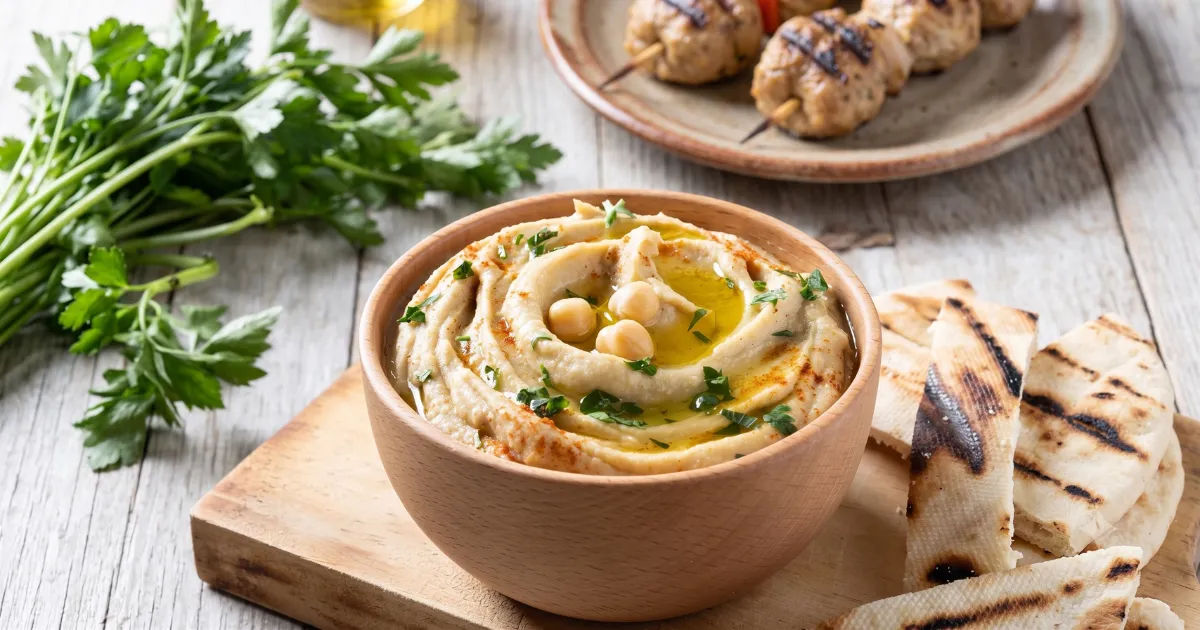
Herb-Infused Hummus

Traditional hummus is already one of the world's favorite middle eastern appetizers, but adding fresh herbs creates exciting flavor variations.

Classic hummus contains chickpeas, tahini, garlic, lemon juice, olive oil, and cumin. Fresh herbs can transform this familiar dip into something unique.

Popular Herb Options

Parsley Hummus

Fresh parsley creates a vibrant green color while adding mild peppery notes.

Cilantro Hummus

Cilantro offers a bright, citrus-like flavor that pairs well with garlic.

Dill Hummus

Fresh dill creates a lighter, slightly sweet variation.

Mint Hummus

Mint produces an especially refreshing version during warm weather.

Baba Ganoush with Fresh Herbs

Baba ganoush is another classic among middle eastern appetizers.

Made from roasted eggplant, tahini, garlic, lemon juice, and olive oil, baba ganoush becomes even more flavorful when topped with chopped parsley, mint, or cilantro.

The smoky eggplant contrasts beautifully with the brightness of fresh herbs.

Recommended Garnishes

  • Chopped parsley

  • Mint leaves

  • Cilantro

  • Fresh thyme

These herbs not only improve flavor but also make the presentation more appealing.

Labneh with Herbs

Labneh is a thick strained yogurt that appears on many mezze tables.

Although delicious on its own, fresh herbs elevate its flavor significantly.

Popular additions include:

  • Mint

  • Dill

  • Parsley

  • Chives

  • Thyme

A drizzle of olive oil and a sprinkle of herbs turn simple labneh into one of the easiest middle eastern appetizers to prepare.

Serve with warm pita, cucumbers, carrots, or olives.

Stuffed Grape Leaves

Stuffed grape leaves, often called dolma or warak enab, rely heavily on herbs.

The filling typically includes rice, onions, parsley, mint, dill, olive oil, lemon juice, and spices.

Many recipes use nearly equal amounts of herbs and rice, producing a filling that is fresh rather than heavy.

Key Herbs

  • Parsley

  • Mint

  • Dill

The herbs keep the filling light while complementing the tangy grape leaves.

Falafel with Fresh Herbs

Many people assume falafel is made mainly from chickpeas, but herbs are equally important.

Authentic falafel mixtures often include generous amounts of parsley and cilantro blended with chickpeas, garlic, onions, cumin, coriander, and other spices.

The herbs help create the signature green interior found in traditional falafel.

Why Herbs Matter

Fresh herbs add moisture, improve texture, and provide the fresh flavor that distinguishes authentic falafel from dry versions.

Serve falafel with herb-filled tahini sauce, chopped salad, or fresh pita for a satisfying appetizer.

Fresh Herb Yogurt Dip

A refreshing yogurt dip is one of the simplest middle eastern appetizers you can prepare. Thick yogurt mixed with chopped mint, dill, parsley, garlic, lemon juice, and olive oil creates a creamy dip that pairs well with vegetables, grilled meats, and warm pita bread.

Best Herb Combinations

Fresh herbs can be mixed to create different flavor profiles.

  • Parsley and mint for a bright, refreshing taste.

  • Dill and mint for a cool and creamy dip.

  • Cilantro and parsley for a bold herbal flavor.

  • Thyme and parsley for an earthy finish.

This appetizer is quick to prepare and is perfect for both casual meals and special occasions.

Herb-Filled Cheese Pastries

Many traditional pastries found among middle eastern appetizers include generous amounts of fresh herbs. Soft cheeses such as feta or akkawi are often combined with parsley, mint, dill, or cilantro before being wrapped in thin pastry dough and baked until golden brown.

The herbs keep the filling light while adding fresh flavor that balances the richness of the cheese.

Serving Ideas

These pastries taste wonderful with:

  • Fresh tomatoes

  • Olives

  • Cucumber slices

  • Yogurt dip

  • Lemon wedges

They can be served warm or at room temperature, making them an excellent party appetizer.

Fresh Herb Vegetable Platters

Not every appetizer requires cooking. Traditional mezze often includes fresh vegetables accompanied by herb-based dips.

Popular vegetables include:

  • Cucumbers

  • Carrots

  • Bell peppers

  • Radishes

  • Cherry tomatoes

  • Celery

Pair these vegetables with hummus, labneh, or baba ganoush topped generously with chopped parsley and mint. These colorful platters are among the healthiest middle eastern appetizers because they are naturally rich in fiber, vitamins, and minerals.

Fresh Herb Salads Beyond Tabbouleh

Although tabbouleh is the best-known herb salad, several other middle eastern appetizers also feature abundant fresh herbs.

Many regional salads combine:

  • Chopped parsley

  • Fresh mint

  • Tomatoes

  • Cucumbers

  • Green onions

  • Olive oil

  • Lemon juice

  • Sumac

These simple ingredients create crisp, refreshing salads that complement grilled meats and richer dishes.

How to Choose Fresh Herbs

The quality of herbs greatly affects the flavor of middle eastern appetizers.

When shopping, look for herbs that have:

  • Bright green leaves

  • Firm stems

  • No yellow spots

  • No slimy texture

  • A fresh, pleasant aroma

Avoid herbs that appear wilted or dry because they lose much of their flavor.

Proper Storage Tips

Fresh herbs stay flavorful longer when stored correctly.

Refrigeration

Wrap herbs loosely in a damp paper towel before placing them inside a storage bag in the refrigerator.

Water Method

Place herbs like parsley and cilantro in a glass of water and loosely cover the leaves with a plastic bag.

Freezing

Chopped herbs can be frozen with olive oil in ice cube trays for convenient cooking later.

Proper storage helps reduce waste while ensuring your middle eastern appetizers always taste fresh.

Tips for Preparing Herb-Based Appetizers

Fresh herbs are delicate and should be handled carefully.

Wash Thoroughly

Rinse herbs under cool water to remove dirt before drying completely.

Chop Just Before Serving

Fresh herbs lose aroma after cutting, so chop them shortly before serving whenever possible.

Use Sharp Knives

Sharp knives prevent bruising and preserve the herbs' natural oils.

Balance Flavors

Avoid overwhelming the dish with one herb. Combining parsley with mint or dill often creates a more balanced flavor.

These simple techniques improve both the appearance and taste of homemade middle eastern appetizers.

Common Mistakes to Avoid

Even experienced cooks sometimes make mistakes when preparing herb-rich dishes.

Using Dried Herbs Instead of Fresh

Many traditional recipes depend on the brightness of fresh herbs. Dried herbs cannot fully replace them.

Overmixing

Stir gently to avoid bruising delicate herbs.

Adding Herbs Too Early

Fresh herbs should often be added near the end of preparation to preserve their color and aroma.

Ignoring Balance

Too much mint or cilantro can overpower other ingredients. A balanced combination creates better flavor.

Avoiding these mistakes will help your middle eastern appetizers taste more authentic.

Health Benefits of Fresh Herbs

Fresh herbs contribute more than flavor.

Some potential benefits include:

  • Rich in antioxidants

  • Good source of vitamins A, C, and K

  • May support healthy digestion

  • Naturally low in calories

  • Add flavor without extra salt

  • Provide dietary fiber in many recipes

Because herbs replace heavy sauces in many middle eastern appetizers, these dishes often fit well into balanced eating habits.

Building a Mezze Platter with Fresh Herbs

A traditional mezze platter showcases several middle eastern appetizers together.

An attractive platter may include:

  • Herb hummus

  • Baba ganoush

  • Labneh

  • Tabbouleh

  • Fattoush

  • Stuffed grape leaves

  • Falafel

  • Fresh vegetables

  • Olives

  • Warm pita bread

Finish the platter with extra parsley, mint leaves, lemon wedges, and a drizzle of high-quality olive oil. The fresh herbs tie all the flavors together while creating a colorful presentation.

Frequently Asked Questions

Which herb is used most often in Middle Eastern appetizers?

Parsley is the most widely used herb. It appears in salads, dips, stuffed vegetables, falafel, and many other traditional recipes.

Can I substitute dried herbs?

Fresh herbs are recommended because they provide brighter flavor, better texture, and more vibrant color. Dried herbs work in some cooked dishes but are not ideal for fresh salads and dips.

Which herbs pair best with hummus?

Parsley, cilantro, dill, and mint are all excellent additions to hummus. Each creates a different flavor while maintaining the traditional character of the dip.

Are herb-based appetizers healthy?

Yes. Many middle eastern appetizers contain vegetables, olive oil, legumes, yogurt, and generous amounts of fresh herbs, making them nutritious choices when enjoyed as part of a balanced diet.

Can I prepare herb appetizers ahead of time?

Some dishes, such as hummus, labneh, and baba ganoush, can be prepared in advance. Salads like tabbouleh and fattoush taste best when the herbs are chopped shortly before serving.

Conclusion

Fresh herbs are one of the defining characteristics of authentic middle eastern appetizers. Rather than serving as simple garnishes, parsley, mint, cilantro, dill, thyme, and oregano become essential ingredients that shape the flavor, aroma, texture, and appearance of each dish. Whether you are enjoying a bowl of tabbouleh, creamy hummus, smoky baba ganoush, crisp fattoush, herb-filled stuffed grape leaves, or freshly made falafel, the generous use of herbs creates the bright and refreshing taste that makes these recipes so memorable.

Preparing middle eastern appetizers at home is also an excellent way to enjoy wholesome ingredients while exploring the rich culinary traditions of the Middle East. By selecting fresh herbs, storing them properly, and combining them thoughtfully with vegetables, legumes, yogurt, and olive oil, you can create appetizers that are both delicious and nutritious. From simple family meals to festive gatherings, herb-filled appetizers bring color, freshness, and authentic flavor to every table, making them a timeless favorite for cooks and food lovers around the world.