
A Url shortner may look like a simple tool that turns a long web address into a shorter one, but the best platforms do much more than reduce the number of characters in a link. A truly smart Url shortner can help businesses, marketers, content creators, and everyday users create cleaner links, understand how people interact with them, and manage campaigns more effectively.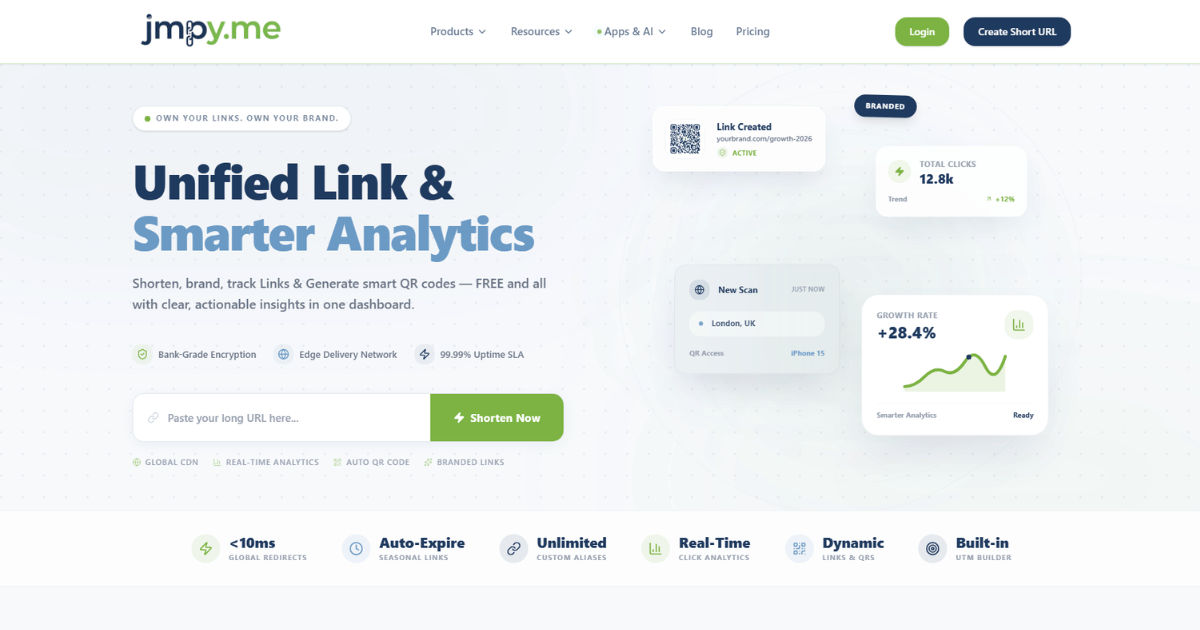
In the early days of the internet, shortening a link was mainly about saving space. Long URLs could be difficult to type, share, or remember. Today, the role of a shortened link has changed. Modern users expect links to work quickly, look trustworthy, provide useful data, and fit smoothly into different marketing channels.
A smart Url shortner brings these requirements together in one system. It can create branded links, track clicks, measure visitor behavior, organize campaigns, and provide security features. Instead of simply changing a long URL into a short one, it becomes a useful part of a broader digital strategy.
This is especially important for businesses that share links across social media, email campaigns, advertisements, printed materials, QR codes, and websites. When every click can provide useful information, a shortened URL can become more than a convenience. It can become a source of insight.
Understanding what makes a Url shortner smart helps you choose the right solution for your needs. Whether you run a small business, manage digital marketing campaigns, publish content, or simply share links regularly, the right features can make your links easier to manage and more effective.
What Is a Url Shortner?
A URL shortener is a service that converts a long web address into a shorter link that redirects users to the original destination.
For example, a long URL may contain multiple folders, tracking parameters, product details, or campaign information. Sharing such a link can look messy, especially in social media posts, text messages, or printed advertisements.
A shortened link replaces that lengthy address with a compact version. When someone clicks it, the short link sends the visitor to the original webpage.
The process usually involves a redirection system. The short link points to a record stored by the shortening service. That record tells the system where the visitor should be sent.
The basic concept is simple, but modern technology allows the same system to perform many additional tasks.
A smart Url shortner can record how many people clicked a link, where those visitors came from, which devices they used, and when they clicked. Depending on the platform, it may also allow users to edit destinations, create custom links, manage campaigns, and monitor performance.
This makes the difference between a basic shortening service and a smart one.
Why Smart Link Shortening Matters
The internet has become increasingly crowded. Businesses compete for attention across websites, social networks, search engines, email inboxes, and mobile applications.
A link is often the final step between someone noticing your content and taking action.
If the link looks confusing, unreliable, or suspicious, people may hesitate to click it. If the link is easy to recognize and connected to a trusted brand, it can create a better experience.
A smart Url shortner addresses several challenges at once.
It can make links easier to share. It can improve branding. It can provide useful analytics. It can help organize campaigns and reduce the need to manually manage dozens or hundreds of URLs.
For marketers, the biggest advantage is often visibility.
Instead of wondering whether a campaign generated interest, marketers can examine actual link activity. They can identify which channels perform well and which campaigns need improvement.
This turns link management from a basic technical task into a measurable marketing activity.
The Most Important Feature: Reliable Redirection
The first responsibility of any link-shortening platform is simple: the link must work.
A beautifully designed dashboard and detailed analytics are useless if visitors cannot reach the destination page.
A smart Url shortner should provide reliable redirection with minimal delays. When a person clicks a shortened link, the system should process the request quickly and send them to the intended webpage.
Reliability also means maintaining links over time.
Businesses may use shortened URLs for months or years. A link shared in an old social media post, printed brochure, or business card may continue receiving traffic long after it was created.
A good platform should have strong infrastructure and dependable service availability.
The service should also clearly explain what happens if the account is closed, a subscription expires, or a campaign is removed. Businesses need to understand whether their existing links will continue working.
Link stability is particularly important for printed materials. Once a short link is printed on packaging, posters, flyers, or signs, changing it can be expensive.
For this reason, reliability should always be considered before advanced features.
Branded Short Links Build Recognition
One of the strongest features of a modern Url shortner is the ability to create branded links.
A generic shortened URL may contain random letters and numbers. While such a link may work perfectly, it does not necessarily tell the visitor who created it.
A branded short link can include a recognizable domain or meaningful wording.
This can improve visibility and make the link feel more intentional.
Imagine seeing two links in a social media post. One looks like a random collection of characters, while the other clearly reflects the name of the company or campaign.
The branded option may immediately appear more professional.
Branded links are especially useful for businesses because they help reinforce identity across different channels. A company can use recognizable short links in social posts, email messages, advertisements, printed materials, and presentations.
Brand recognition is not only about logos and colors. The links themselves can become part of the brand experience.
Custom Keywords Make Links More Meaningful
Another useful feature is the ability to customize the ending of a shortened URL.
Instead of receiving an automatically generated combination of characters, users may be able to choose a meaningful keyword.
For example, a campaign link might use a word related to a product launch, seasonal promotion, or event.
This makes the link easier to understand and remember.
A meaningful short link can also help teams organize their campaigns. When employees see a recognizable keyword, they may immediately understand what the link is associated with.
However, customization should be used carefully.
A short link should remain relatively concise. It should also avoid misleading wording. The destination should always match what the link appears to promise.
Clarity and honesty are more important than making a link clever.
Detailed Click Analytics
Analytics are one of the biggest reasons businesses choose a smart Url shortner instead of manually sharing long URLs.
A strong analytics system can show how many times a link was clicked and when those clicks occurred.
This information can help determine whether a campaign is attracting attention.
For example, suppose a company shares a product page through email, social media, and an online advertisement.
If each channel uses a separate shortened link, the company can compare their performance.
The marketing team may discover that the email campaign generates many clicks while a particular social platform produces fewer visits. That information can influence future marketing decisions.
Analytics may also show trends over time.
A campaign might receive strong interest immediately after launch and then gradually slow down. Another campaign may perform consistently over several weeks.
Understanding these patterns helps businesses make better decisions.
Geographic Data Can Reveal Audience Patterns
Many smart link platforms provide geographic information about visitors.
Depending on privacy settings and the platform's capabilities, analytics may provide approximate information about countries, regions, or cities.
This can help businesses understand where their audience is located.
For example, a company may assume that most visitors come from one market but discover that another region is producing significant traffic.
That insight could influence advertising budgets, content localization, or expansion plans.
Geographic information can also help marketers understand campaign reach.
However, businesses should always consider privacy requirements when collecting and using visitor data. Analytics should be handled responsibly and in accordance with applicable laws and platform policies.
The purpose of analytics should be to improve experiences and decisions, not to collect unnecessary personal information.
Device and Platform Tracking
People access the internet through many different devices.
A smart Url shortner may show whether clicks came from mobile phones, tablets, or desktop computers.
This information can be extremely useful.
If most visitors are accessing a campaign through smartphones, the destination page should provide a strong mobile experience.
A company may also discover that one campaign performs differently depending on the device.
For example, a landing page may work well on desktop computers but load slowly on mobile devices. Analytics can reveal unusual differences in behavior and encourage the business to investigate.
Device information can therefore connect link performance with website usability.
The short link itself does not solve a poor mobile experience, but its analytics can help identify the problem.
Time-Based Analytics Improve Campaign Planning
Timing matters in digital marketing.
A smart Url shortner can help users understand when people are most likely to click.
Some audiences may be highly active during working hours. Others may respond better in the evening or on weekends.
By examining click patterns, marketers can identify useful trends.
This information can help with scheduling future campaigns.
For example, if a company notices that most clicks occur shortly after an email is sent, it may decide to coordinate other promotional activities during that period.
Time-based analytics can also show whether a campaign has lost momentum.
This makes it easier to determine when to refresh content or launch a new promotion.
Link Management Should Be Simple
As businesses grow, they often create hundreds or even thousands of links.
Managing these links manually can become difficult.
A smart Url shortner should provide an organized dashboard where users can search, sort, label, and manage their links.
Campaign folders or tags can make organization easier.
For example, a marketing team might separate links by product, department, client, or campaign.
This becomes especially valuable when multiple people work on the same projects.
A well-designed management system reduces confusion and makes it easier to find the right link when needed.
Editable Destination URLs Add Flexibility
One particularly useful feature is the ability to change where a shortened link sends visitors without changing the short link itself.
This can be valuable for campaigns that run for long periods.
Suppose a business prints a short link on thousands of brochures. Initially, the link leads to a product page.
Later, the business wants to send visitors to a special offer or updated landing page.
If the platform allows destination editing, the company can update the target while keeping the same short link.
This eliminates the need to replace printed materials.
However, destination editing should be controlled carefully. Businesses should ensure that changes do not confuse users or create misleading links.
Smart Links Can Support A/B Testing
A sophisticated Url shortner may support advanced campaign testing.
A/B testing involves comparing two versions of a marketing experience to determine which performs better.
For example, a company might test two landing pages.
One short link could direct visitors to the first version, while another directs visitors to the second.
By comparing click and conversion results, the company can learn which approach works better.
Some advanced systems may also support more sophisticated routing methods.
These capabilities can help marketers experiment without completely rebuilding their campaigns.
The important point is that link analytics should connect with broader marketing goals. Clicks are useful, but the ultimate objective may be sales, registrations, downloads, or another action.
QR Code Integration
QR codes have become common in restaurants, retail stores, events, packaging, and advertising.
A smart Url shortner can work particularly well with QR codes.
Instead of encoding a long destination URL directly into a QR code, businesses can connect the QR code to a shortened link.
This creates several advantages.
The QR code can remain unchanged even if the destination page is updated, provided the short link supports destination editing.
Businesses can also track how many people scanned the code and analyze campaign performance.
For example, a restaurant might place a QR code on a table that leads to a digital menu.
A retailer might use a QR code on product packaging to provide instructions or additional information.
A conference organizer might use one on event materials to direct attendees to registration details.
In each case, the shortened link becomes part of the connection between the physical and digital worlds.
Security Is Essential
Shortened links can sometimes hide the final destination.
This creates a security concern.
A malicious person could potentially use a shortened link to direct visitors toward a harmful or fraudulent website.
For this reason, security should be a major consideration when choosing a Url shortner.
A trustworthy platform should take steps to detect abuse and prevent malicious links from being created or distributed through its service.
Some services may use automated scanning, reputation checks, or reporting systems.
Users should also be cautious when clicking unfamiliar shortened links.
Businesses using shortened URLs should protect their accounts with strong passwords and, where available, multi-factor authentication.
Security is not an optional extra. A link platform that ignores abuse can damage the trust of everyone who uses it.
Spam and Abuse Prevention
A responsible link-shortening service should have systems for identifying suspicious activity.
This may include monitoring unusual behavior, reviewing reported links, and removing abusive content.
The goal is to prevent the service from becoming a tool for phishing, malware distribution, or other harmful activities.
For legitimate businesses, this matters because the reputation of a shortening domain can influence how people perceive its links.
If a shortening service becomes heavily associated with spam, users may become reluctant to click links created through it.
Therefore, abuse prevention protects both the platform and its legitimate customers.
Privacy Should Be Taken Seriously
Analytics can be valuable, but data collection must be responsible.
A smart Url shortner may collect information about link activity, such as approximate location, device type, referral source, and time of click.
Businesses should understand what information is collected and how it is stored.
Privacy policies should be clear and easy to understand.
Organizations should also consider whether their use of analytics complies with relevant privacy laws and internal policies.
The best approach is to collect information that has a genuine business purpose and avoid unnecessary data collection.
Transparency builds trust.
Fast Performance Matters
Every additional step in the process can potentially affect the user experience.
When someone clicks a shortened link, the system must process the request before sending the visitor to the destination.
A good Url shortner should perform this redirection quickly.
Slow redirects can create frustration, particularly for mobile users with slower connections.
Performance also matters when links receive large amounts of traffic.
A campaign that suddenly becomes popular can generate thousands or millions of clicks. The shortening platform should be able to handle traffic without becoming a bottleneck.
This is one reason businesses should consider the reliability and infrastructure behind a shortening service rather than choosing a platform based only on its appearance.
Integration With Other Marketing Tools
A smart link platform becomes more useful when it works well with other tools.
Businesses may want to connect link data with analytics platforms, customer relationship management systems, advertising tools, or marketing automation software.
Integrations reduce manual work.
Instead of checking multiple dashboards separately, teams may be able to bring relevant information into a broader reporting system.
For larger organizations, API access can also be important.
An API allows software applications to communicate with the link platform programmatically.
This can help businesses create, manage, and monitor links at scale.
However, integrations should be selected based on actual needs. A small business may not require advanced API capabilities, while a large marketing organization may depend on them.
Team Collaboration Features
Modern marketing rarely happens through one person working alone.
A team may include content writers, designers, social media managers, advertising specialists, and business owners.
A smart Url shortner can support collaboration by allowing multiple users to access and manage links.
Permission controls are particularly useful.
For example, some team members may need permission to create links, while others may only need access to analytics.
This reduces the risk of accidental changes.
A good system should make it clear who can edit, delete, or manage important resources.
Custom Domains and Brand Trust
Using a custom domain can strengthen the relationship between a shortened link and the organization behind it.
Instead of using a generic shortening domain, a business may use a domain that reflects its own identity.
This can make links easier to recognize.
It may also help users feel more comfortable clicking.
However, a branded link should never be treated as a substitute for security.
Users should still verify that the destination is legitimate.
Businesses should also protect their custom domains carefully because they become part of the brand's online identity.
Link Expiration and Temporary Campaigns
Some campaigns are designed to run only for a limited time.
In these situations, link expiration can be useful.
A business may create a link for a temporary event, limited promotion, or short-term campaign.
Once the campaign ends, the link can be disabled or redirected.
This can help reduce clutter and improve campaign management.
However, expiration should be used carefully.
If a link has been printed on a permanent document, disabling it too soon could create a poor user experience.
Before setting an expiration date, businesses should consider how long the link may remain useful.
The Importance of a Clear Dashboard
A smart platform should not only be powerful. It should also be easy to use.
A dashboard that contains dozens of confusing options may overwhelm users.
The most important information should be easy to find.
Users should quickly be able to create a link, view performance, search existing links, and manage campaigns.
Charts and reports should provide useful information without unnecessary complexity.
The best interface is usually one that allows beginners to perform basic tasks easily while still offering advanced options for experienced users.
Reporting Should Support Real Decisions
Analytics are only useful when they lead to better decisions.
A dashboard may report thousands of clicks, but that number alone does not explain whether a campaign succeeded.
Smart reporting should help users understand what the numbers mean.
For example, a campaign with many clicks but very few conversions may need a better landing page.
Another campaign with fewer clicks but a high conversion rate may be more valuable.
Businesses should therefore consider how link data fits into the complete customer journey.
A smart Url shortner should be treated as one part of the measurement system, not the entire marketing strategy.
Short Links and Social Media
Social media platforms often have limited space or visually crowded interfaces.
Short links can make posts cleaner and easier to read.
They can also be useful when a platform does not automatically create a neat preview.
For businesses, branded short links may improve consistency across different social channels.
However, marketers should avoid assuming that shorter always means better.
The link should still be understandable and trustworthy.
In some cases, a full URL may provide more context. The decision should depend on the platform and audience.
Short Links in Email Campaigns
Email marketing is another area where shortened links can be useful.
They can make calls to action look cleaner and help marketers measure clicks.
Different links can be created for different email campaigns, allowing teams to compare performance.
However, marketers should use shortening services carefully.
Email security systems sometimes inspect links for suspicious behavior. A trustworthy, well-established platform is generally preferable to an unknown service.
Businesses should also ensure that their links lead to secure and relevant destinations.
Short Links for Offline Marketing
One of the biggest advantages of short links is their usefulness in offline environments.
A long URL can be difficult to type manually.
A short link is easier to remember and enter.
This can be useful on posters, business cards, brochures, packaging, billboards, and printed advertisements.
For example, a company might place a short link on a product package that leads customers to a support page.
Because the link is short, the customer can enter it without typing a complicated address.
When combined with a QR code, the experience can become even easier.
Choosing the Right Url Shortner
The best platform depends on the user's needs.
An individual who occasionally shares links may only need basic shortening.
A small business may benefit from branded links and simple analytics.
A large organization may require advanced reporting, team permissions, API access, security controls, and integrations.
Before choosing a service, consider the following questions.
Does it provide reliable redirection?
Can you create branded links?
Can you customize the link ending?
Does it provide useful analytics?
Can you edit destinations?
Does it support QR codes?
How does it handle security and abuse?
Does it provide team management?
Are integrations available?
What happens to your links if your subscription changes?
The answers can help determine whether the platform is suitable for long-term use.
Common Mistakes When Using Short Links
One common mistake is shortening every link without considering whether it provides value.
Not every URL needs to be shortened.
Another mistake is using random or untrustworthy shortening services.
Businesses should consider the reputation and reliability of the platform before using it in important campaigns.
Poor organization is another issue.
Creating hundreds of links without naming conventions or folders can make management difficult.
It is also a mistake to focus only on clicks.
A high click count does not automatically mean a successful campaign.
Businesses should connect link activity with meaningful outcomes.
Finally, companies should avoid misleading short links.
The destination should match the expectation created by the link.
Trust is difficult to build and easy to lose.
How to Use a Smart Url Shortner Effectively
The first step is to define the purpose of each link.
Is it for a social media campaign?
An email?
A printed advertisement?
A QR code?
A product?
A temporary event?
Knowing the purpose helps determine the right settings.
Next, create a consistent naming system.
Use recognizable keywords that make links easy to identify internally.
Then track performance.
Look beyond total clicks and examine patterns over time, devices, and traffic sources where appropriate.
Review the results regularly.
If one campaign performs better than another, investigate why.
The goal is not simply to collect data. The goal is to learn from it.
What Makes a Url Shortner Truly Smart?
A truly smart Url shortner combines several capabilities.
It provides reliable redirection so visitors reach the correct destination.
It creates clean and recognizable links.
It supports branding and customization.
It provides analytics that help users understand performance.
It offers tools for managing large numbers of links.
It supports security and abuse prevention.
It respects privacy.
It integrates with other systems when necessary.
Most importantly, it helps users make better decisions.
A basic shortening service answers one question: "How can I make this URL shorter?"
A smart platform answers much bigger questions.
Who is clicking?
When are they clicking?
Where are they coming from?
Which campaign is performing best?
Which link should be updated?
How can the business improve its marketing?
That difference is what makes a link-shortening tool genuinely valuable.
Conclusion
A Url shortner has evolved far beyond its original purpose.
What began as a simple way to reduce the length of web addresses has become an important tool for digital communication, marketing, analytics, and campaign management.
The smartest platforms combine convenience with useful data.
They help businesses create links that are easier to share and recognize while providing insights into how those links perform.
Features such as branded domains, custom keywords, analytics, destination editing, QR code support, security controls, and team collaboration can make a major difference.
However, technology alone does not guarantee success.
A smart Url shortner is most valuable when it is used as part of a thoughtful strategy.
Businesses should create links with clear goals, organize them properly, monitor performance, and use the resulting data to make informed decisions.
It is also important to consider security and privacy. A shortened link should inspire confidence rather than uncertainty. The platform behind it should have strong reliability and responsible systems for handling abuse.
For small businesses, the right solution can make digital campaigns easier to measure. For marketers, it can provide valuable performance insights. For content creators, it can make links cleaner and more manageable. For organizations using printed marketing, it can connect physical materials with online destinations.
Ultimately, the smartest Url shortner is not necessarily the one with the longest feature list.
It is the one that provides the features you actually need, works reliably, protects users, and helps you understand what happens after someone clicks.
A short link may only take a moment to create, but the information and control behind that link can have long-term value.
When chosen carefully and used responsibly, a modern link-shortening platform can become a practical part of a well-managed digital strategy. It can simplify sharing, strengthen branding, improve campaign measurement, and turn ordinary links into useful sources of insight.
That is what truly makes a Url shortner smart: not simply making a URL shorter, but making the entire process of sharing, tracking, managing, and improving digital links more intelligent.