
Yes, white label short links can be better for branding, especially when a business wants every customer-facing link to look professional, recognizable, and consistent with its identity. Instead of sharing a generic shortened URL that belongs to a third-party service, a company can use its own branded domain to create short links that reinforce its name every time someone clicks or shares one.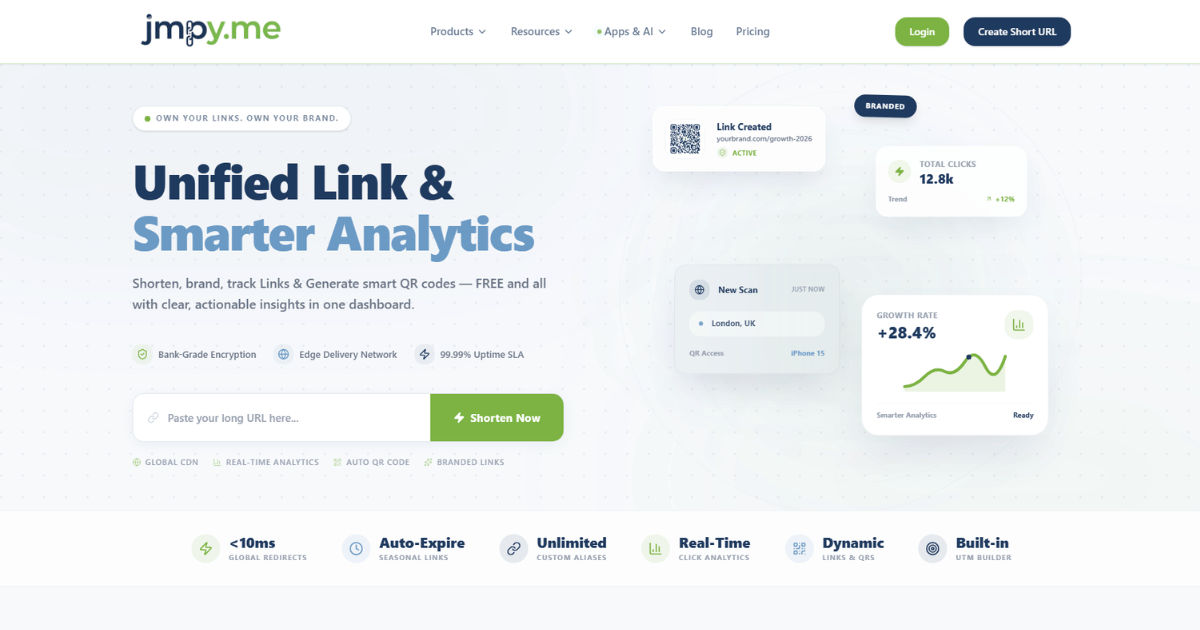
The value of custom branded short links goes beyond making a URL shorter. A well-designed branded link can help people recognize where a link comes from, improve trust, support marketing campaigns, and create a more consistent digital experience across social media, email, advertisements, printed materials, and other channels.
For example, imagine receiving two links. One uses an unfamiliar collection of random letters and numbers, while the other includes a recognizable brand name and a meaningful word. The second link is usually easier to understand and may feel safer to click.
This is one of the main reasons businesses consider white label link shortening. The goal is not simply to reduce the number of characters in a URL. The goal is to turn the link itself into a small branding opportunity.
However, white label short links are not automatically the best choice for every business. They require planning, domain management, technical setup, monitoring, and ongoing maintenance. A business must also choose a domain that will remain reliable for years.
Understanding these advantages and limitations is important before deciding whether branded short links are worth adopting.
What Are White Label Short Links?
A white label short link is a shortened URL created through a link-shortening system that allows a business to use its own branding instead of displaying the name of the shortening provider.
Traditional short links often use a domain controlled by the shortening service. The business creates a short URL, but the domain belongs to another company.
With a white label solution, the business can connect a domain or subdomain that represents its own identity. The shortening technology operates behind the scenes, while the customer sees the company's branded link.
The basic process is simple. A long destination URL is entered into the shortening platform. The system creates a shorter URL using the company's chosen branded domain. When someone clicks the short link, the system redirects the visitor to the original destination.
The visible link may be short, but the destination can be much longer.
For instance, a marketing campaign might lead to a product page with tracking parameters, campaign identifiers, and other information. Instead of displaying a long and complicated URL, the business can share a shorter branded address that is easier to read and remember.
The white label part means that the shortening experience can be presented under the business's identity rather than prominently advertising the third-party provider.
This can be particularly valuable for agencies, marketing teams, publishers, SaaS companies, and organizations that distribute large numbers of links.
Why Branding Matters in a Short Link
A URL may seem like a small part of a marketing campaign, but people often see it before they see the destination.
Links appear in social media posts, advertisements, emails, text messages, presentations, business cards, QR codes, and printed marketing materials. Because of this, the structure of a link can influence how people perceive the message.
A generic short URL may provide little information about who created it. A branded short URL can communicate that information immediately.
Brand recognition is especially important when people are deciding whether to click. Internet users are increasingly cautious about suspicious links, phishing attempts, and unknown websites. A recognizable domain can provide additional context about the source.
This does not mean a branded link automatically makes a website trustworthy. A malicious actor could potentially create a misleading domain. Security practices still matter.
However, for legitimate businesses, using a recognizable branded domain can create a more consistent and professional appearance.
Over time, repeated exposure can also strengthen brand familiarity. If customers regularly see links using the same domain, they may begin to recognize that link as belonging to the company.
This is where custom branded short links become more than a technical convenience. They become part of the brand's communication system.
Are White Label Short Links Better for Brand Recognition?
In many cases, yes.
A branded short link can reinforce a company's identity in places where the full brand logo, website design, or company name may not be visible.
Consider a social media post containing a link. The audience may see the URL before clicking it. If the link contains a familiar brand domain, the company name is visible directly within the address.
The same principle applies to email campaigns. A branded link can make a promotional message feel more connected to the company sending it.
The benefit becomes even more noticeable when a business uses links frequently. One individual link may have a small branding impact, but thousands of links shared over time can create repeated exposure.
This repeated exposure can support brand recall.
A short link can also be customized with a meaningful ending. Instead of using an automatically generated sequence, a business may create a short phrase related to the campaign.
For example, a company could use a branded domain followed by a simple campaign term, product name, or event name. This gives the audience more context about where the link leads.
The result is a link that is short, recognizable, and potentially easier to remember.
How White Label Links Improve Professional Appearance
Professionalism is another major advantage.
Businesses spend considerable time developing their visual identity. They choose logos, fonts, colors, packaging, website layouts, and advertising styles.
A generic URL can sometimes feel disconnected from that identity.
A white label short link helps bring the link itself into the branding system.
This is especially important for companies that communicate with customers regularly. If a business sends a proposal, newsletter, advertisement, or promotional message containing a generic third-party short URL, the link may look less polished than the rest of the communication.
A branded URL creates greater consistency.
This does not necessarily mean customers will consciously think, "This company has professional short links." Instead, the branding contributes to the overall impression of the communication.
Professional appearance is often created through many small details. A branded short link is one of those details.
For agencies, this can be even more important. An agency may create campaigns for multiple clients and want every link to match the client's brand. White label infrastructure can allow the agency to provide a branded experience without exposing the underlying link-shortening provider.
Do Branded Short Links Increase Trust?
They can, but the effect depends on the situation.
Trust is one of the strongest arguments for branded links.
When someone receives a link from an unknown source, a generic shortened URL may hide the final destination. This can make some users hesitant to click.
A branded link provides more information.
If the domain matches the organization that sent the message, the recipient has an additional reason to believe the link is relevant to that organization.
For example, a customer who already knows a company's website may feel more comfortable seeing a short link that uses the same recognizable domain or a clearly connected subdomain.
However, businesses should not assume that branding alone solves trust problems.
The domain must be managed carefully. It should have a strong reputation and be protected from misuse. Links should lead to legitimate destinations, and the business should monitor its system for suspicious activity.
Trust is built through consistency.
If a company uses a branded domain responsibly for months or years, customers may become familiar with it. If the same domain suddenly redirects users to unrelated or suspicious pages, that trust can disappear quickly.
Therefore, branded links should be treated as part of the company's digital reputation.
White Label Short Links and Marketing Campaigns
Marketing is one of the strongest use cases for white label short links.
Modern campaigns often involve many channels. A business might promote the same offer through social media, email, paid advertising, printed flyers, QR codes, and offline events.
Short links make these campaigns easier to manage.
A company can create separate links for different channels while directing all of them to the same destination.
For example, one link may be used in an email campaign, another in a social media post, and another on printed promotional material.
This makes it easier to understand how each channel performs.
When combined with analytics, branded short links can help marketers identify patterns in clicks and engagement. They may be able to determine which campaign generated the most activity or which channel attracted the most visitors.
The branding element makes these links more recognizable to the audience, while the tracking element provides useful information to the marketing team.
This combination is one of the reasons businesses adopt custom branded short links as part of their broader marketing infrastructure.
Branded Short Links for Social Media
Social media platforms are ideal environments for short links.
Long URLs can look messy in posts, profiles, comments, or advertisements. A short URL takes up less space and is easier to read.
A branded short link adds another advantage.
Social media users are constantly exposed to links from different businesses and individuals. A recognizable domain can help a company's link stand out.
It can also make the link easier to associate with the brand.
For businesses running multiple campaigns, consistent branded links can create a recognizable pattern across their social media presence.
This is particularly useful for companies that promote products, events, articles, webinars, downloadable resources, or special offers.
However, businesses should remember that every social media platform has its own rules and user behavior. A branded link may work well on one platform but have less impact on another.
The best approach is to test performance rather than assuming that branding alone will increase clicks.
Branded Short Links in Email Marketing
Email marketing is another area where white label links can be valuable.
A professional email usually contains multiple calls to action. These might include links to products, services, articles, account pages, or promotional offers.
Generic shortened URLs can sometimes look out of place in a carefully designed email.
A branded short link can fit more naturally into the communication.
It may also help recipients identify the source of the link.
This can be especially useful for businesses that send emails to large audiences. When people receive frequent messages from a company, consistency becomes important.
Using the same branded domain across campaigns can create familiarity.
However, email marketers should always balance link branding with security and deliverability considerations. The domain should be reputable, properly configured, and monitored.
Businesses should also avoid creating unnecessarily complicated redirect chains because they can introduce technical problems and make troubleshooting more difficult.
White Label Links and QR Codes
QR codes have become common in both digital and physical marketing.
Restaurants, retailers, events, packaging companies, real estate businesses, and service providers all use QR codes to connect offline audiences with online destinations.
A QR code can contain a long URL, but a short branded URL is often easier to manage.
The QR code can point to a branded short link, which then redirects visitors to the current destination.
This creates flexibility.
Suppose a business prints thousands of brochures with a QR code. If the short link is managed properly, the business may be able to change the destination later without replacing the printed materials.
This can be useful for seasonal promotions or campaigns.
A branded short link can also make the QR code more understandable. If someone sees the URL printed underneath the QR code, they can recognize the destination more easily.
This provides a useful combination of offline branding and online tracking.
Do White Label Short Links Help SEO?
This is an area where businesses should have realistic expectations.
A branded short link is not a magic SEO strategy.
Search engine optimization primarily depends on factors such as useful content, website quality, technical performance, relevance, authority, and user experience.
A short link does not automatically improve a website's search rankings.
The main SEO-related advantage is indirect.
Branded links can support marketing and distribution. If they help a business generate more engagement, improve campaign measurement, or increase awareness, those activities may contribute to broader marketing performance.
However, businesses should not choose white label links solely because they expect a direct ranking boost.
Their strongest benefits are usually branding, trust, campaign management, link sharing, and analytics.
The Analytics Advantage
One of the biggest practical benefits of a professional link-shortening system is tracking.
Businesses often need to know what happens after a link is shared.
How many people clicked?
Which campaign generated the most visits?
Which channel performed best?
When did users click?
Which links are receiving little engagement?
Analytics can help answer these questions.
A white label system can allow a company to combine recognizable links with campaign tracking.
This makes the link useful to both the audience and the marketing team.
The audience gets a shorter and more recognizable URL.
The business gets measurable information about link activity.
Of course, analytics data should be interpreted carefully. A click does not necessarily mean a sale, lead, or successful conversion.
Businesses should connect link data with broader performance metrics whenever possible.
The goal should be to understand the customer journey rather than focusing only on the number of clicks.
Are White Label Short Links Better for Agencies?
For digital marketing agencies, white label short links can be particularly valuable.
Agencies often manage campaigns for multiple clients. Each client has a different brand identity and different marketing requirements.
Using a generic link-shortening domain across every campaign may create an inconsistent experience.
A white label platform can help agencies present link infrastructure under their own brand or, depending on the system, under the client's brand.
This can make reports and campaign materials look more professional.
It can also simplify link management.
Instead of managing links through multiple disconnected systems, an agency may be able to organize campaigns in one centralized environment.
For agencies, the value is therefore not only branding. It is also operational efficiency.
The agency can create, manage, track, update, and analyze links from a central system.
When a large number of campaigns are running simultaneously, this can save considerable time.
The Importance of Choosing the Right Domain
The quality of a branded short link depends heavily on the domain used.
A business should choose a domain that is easy to recognize and unlikely to cause confusion.
The domain should ideally be short enough to keep the final URL compact.
At the same time, it should clearly connect to the brand.
Businesses should also think long-term.
A short domain that looks clever today may become confusing later if the company changes its branding or expands into new markets.
Domain ownership is another important consideration.
The business should maintain control of the domain used for its links. It should not depend entirely on an external party owning the brand's primary link domain.
This is because changing domains later can create significant problems.
Old links may be printed on brochures, shared in social media posts, included in emails, or stored in customer documents.
If the domain disappears, those links may stop working.
For this reason, a branded link domain should be treated as a long-term digital asset.
The Risk of Domain Expiration
One of the most overlooked risks is domain expiration.
If a company forgets to renew its branded short-link domain, the consequences can be serious.
Existing links may stop working.
Even worse, the domain could eventually be registered by someone else.
That creates a major security and reputation risk.
Businesses using white label links should therefore establish clear ownership and renewal procedures.
Domain registration information should be monitored, renewal reminders should be configured, and multiple responsible team members should understand the importance of the domain.
This is especially important for businesses that have used the same short links for years.
A link may look small, but thousands of marketing assets can depend on it.
Security Considerations
Security should always be part of the conversation.
A short link creates a redirect between the user and the final destination. If the system is poorly managed, attackers may attempt to abuse it.
Businesses should use secure platforms that provide protection against malicious destinations and suspicious behavior.
They should also monitor links and remove harmful or unauthorized destinations quickly.
The branded domain itself should be protected with strong account security.
Administrative accounts should use strong passwords and multi-factor authentication where available.
Access should also be limited to people who actually need it.
If an employee leaves the company, their access should be removed.
These practices are important because the branded domain is connected to the company's reputation.
A compromised link system can create problems far beyond a single broken URL.
Are White Label Short Links Always Better?
No.
There are situations where a simple generic short-link service may be sufficient.
A small individual project, temporary campaign, or personal use case may not require the additional cost and management involved in maintaining a branded system.
White label solutions also introduce responsibilities.
Someone needs to manage the domain.
Someone needs to monitor the links.
Someone needs to maintain the platform.
Someone needs to review analytics and investigate problems.
For a small business with very limited link usage, these requirements may not justify the investment.
The decision should therefore be based on actual needs.
If branding, trust, analytics, and long-term campaign management are important, white label links may be an excellent investment.
If the primary goal is simply to shorten a URL occasionally, a basic solution may be enough.
White Label Short Links vs Generic Short Links
The difference can be summarized simply.
Generic short links prioritize convenience.
White label short links prioritize control, branding, and professional presentation.
A generic service may be easier to start using. There is often little setup involved.
A white label system requires more preparation, but it provides greater control over the visible link.
The right option depends on the organization's goals.
For casual use, generic links may be perfectly acceptable.
For businesses that distribute links as part of their daily marketing and communication, branded links often make more sense.
The larger the business and the more frequently it shares links, the more valuable consistency becomes.
How to Get the Most From Branded Short Links
Businesses should avoid creating branded links without a clear strategy.
The first step is to establish naming rules.
For example, campaign links should follow a consistent structure. This makes them easier for teams to understand and manage.
Next, businesses should create clear ownership.
Someone should be responsible for the domain, while another person or team may manage campaigns and analytics.
The business should also document its link infrastructure.
This documentation can include the purpose of each link, its destination, campaign information, and responsible team.
Regular audits are also useful.
Over time, businesses accumulate old links. Some may no longer be needed, while others may point to outdated pages.
Reviewing links periodically can help reduce clutter and identify potential problems.
Finally, businesses should measure results.
The goal is not to create attractive links for their own sake. The goal is to improve communication, recognition, trust, and marketing performance.
Common Mistakes Businesses Make
One common mistake is choosing a domain that is too complicated.
A short link should be easy to understand. If the branded domain is long or confusing, much of the benefit is lost.
Another mistake is changing domains too frequently.
Consistency is important. A business should choose a domain carefully and plan to maintain it for the long term.
Some businesses also ignore link governance.
Without clear rules, different employees may create links with inconsistent naming structures.
This can make analytics and management more difficult.
Another problem is failing to monitor redirects.
Links should be tested regularly, especially before major campaigns.
A broken branded link can damage trust because customers associate the link directly with the business.
Finally, businesses sometimes focus too much on clicks.
A high click count is not necessarily a successful campaign.
The real question is whether those clicks produced meaningful results.
The Long-Term Branding Value
The biggest argument for white label short links is long-term consistency.
Branding is not created through one advertisement or one social media post.
It develops through repeated interactions.
Customers see the same name, colors, messaging, website, packaging, and communication style over time.
A branded short link can become another consistent part of that experience.
This is especially valuable for companies that operate across multiple marketing channels.
A customer may first discover a business through social media, later receive an email, then scan a QR code, and finally visit the company's website.
If branded links appear consistently throughout that journey, the experience feels more connected.
The link becomes part of the brand's digital identity.
That may seem like a small advantage, but branding is often built from many small, repeated signals.
Should Your Business Use White Label Short Links?
The answer depends on how important digital branding is to your organization.
A business that regularly shares links with customers, prospects, partners, or audiences should seriously consider using a branded system.
The benefits are strongest when links are used frequently.
If your company runs marketing campaigns, tracks engagement, manages multiple channels, or wants greater control over its digital identity, white label short links can be a practical investment.
They can help make links look more professional and recognizable.
They can also improve campaign organization and provide useful analytics.
However, the system should be implemented carefully.
Choose a reliable domain.
Protect it.
Monitor it.
Create consistent naming standards.
Track performance.
Keep the domain active for the long term.
These steps help ensure that the branding benefits are not undermined by technical or management problems.
Conclusion
White label short links can be better for branding because they give businesses greater control over one of the most frequently overlooked parts of digital communication: the URL.
A short link is often treated as nothing more than a technical shortcut. In reality, the visible link can influence how people recognize, interpret, and trust a message.When a business uses a branded domain consistently, every shared link becomes another opportunity to reinforce its identity.
The advantages are particularly clear for companies that run frequent marketing campaigns. Social media posts, email campaigns, QR codes, advertisements, printed materials, and promotional content can all use a consistent link identity.This consistency can make communication feel more professional and connected.
Custom branded short links can also provide practical advantages beyond branding. Depending on the platform, businesses can track clicks, organize campaigns, measure channel performance, and manage large numbers of links from a centralized system.
For agencies and larger marketing teams, these capabilities can improve efficiency as well as presentation.
The best approach is to think of a branded short-link domain as a digital business asset.
Choose it carefully.
- Keep it secure.
- Maintain it consistently.
- Use it across appropriate marketing channels.
- Measure what happens after people click.
Most importantly, connect link performance with real business goals instead of judging success only by the number of clicks.
So, are white label short links better for branding?
For businesses that care about brand consistency, customer trust, professional communication, and long-term control, the answer is generally yes.
They will not replace good marketing, useful content, or a strong customer experience. They are also not a direct shortcut to better search rankings or guaranteed conversions.