Website AEO and GEO Checker plays an important role in understanding how content performs in answer engines and search systems. Website AEO and GEO Checker helps beginners identify missing areas in content strategy that affect visibility.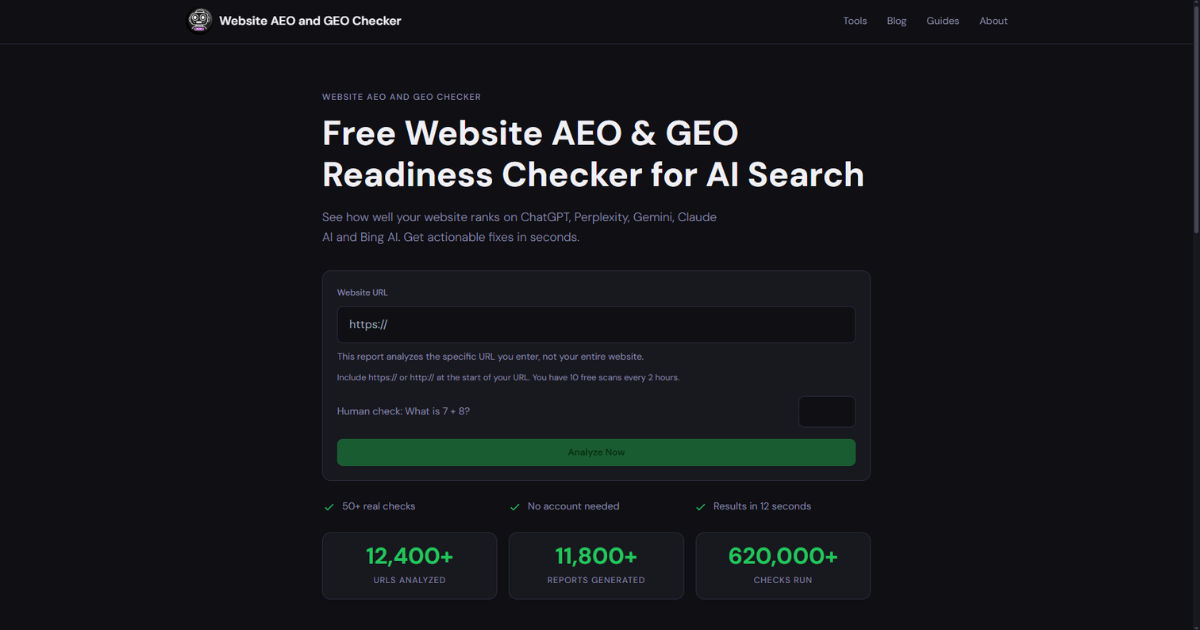
Website AEO and GEO Checker is especially useful when websites fail to answer user questions completely or clearly.In simple terms, AEO (Answer Engine Optimization) content gaps are missing pieces of information that prevent a webpage from fully satisfying user intent.
These gaps can reduce rankings, lower engagement, and weaken authority in search engines. Website AEO and GEO Checker helps detect these weaknesses so content creators can improve structure, clarity, and completeness.
In this detailed guide, we will explore how these content gaps appear, why they matter, and how you can fix them step by step. Website AEO and GEO Checker will be referenced throughout to help you understand its importance in identifying content issues.
This article is written in simple language so 12th-grade students and beginners can easily understand the topic. Website AEO and GEO Checker will also be used to show how content auditing tools support better optimization.
What Are AEO Content Gaps?
AEO content gaps are missing or weak sections in your content that fail to answer user questions fully. Website AEO and GEO Checker helps identify these missing elements by analyzing how well your content matches search intent.
These gaps usually appear when:
- Important questions are not answered
- Content lacks depth or examples
- Keywords are not aligned with user intent
- Information is outdated or incomplete
Website AEO and GEO Checker allows content creators to detect these issues early. When users do not find complete answers, they leave the page quickly, increasing bounce rates. Website AEO and GEO Checker helps reduce this by highlighting missing areas.
AEO content gaps are not always obvious. Sometimes content looks complete, but it still fails to satisfy search engines. Website AEO and GEO Checker is designed to detect both visible and hidden gaps in content structure.
Why Do Website AEO Content Gaps Appear?
Content gaps appear for several reasons. Website AEO and GEO Checker helps reveal these reasons clearly so you can fix them faster.
Lack of User Intent Research
One major reason is poor understanding of user intent. Website AEO and GEO Checker shows that many writers create content without fully researching what users actually want.
For example:
- Users want step-by-step guides, but content only gives definitions
- Users want comparisons, but content only describes one option
Website AEO and GEO Checker highlights these mismatches and helps improve relevance.
Weak Keyword Strategy
Another reason is weak keyword targeting. Website AEO and GEO Checker often detects that content is missing related keywords or supporting topics.
When keyword planning is incomplete:
- Important subtopics are missed
- Content becomes shallow
- Search engines do not fully understand the page
Website AEO and GEO Checker helps identify keyword-related gaps and improve semantic coverage.
Poor Content Structure
If content is not structured properly, gaps naturally appear. Website AEO and GEO Checker shows that headings, subheadings, and logical flow are essential.
Poor structure leads to:
- Confusing reading experience
- Missing logical steps
- Incomplete topic coverage
Website AEO and GEO Checker helps reorganize content for better clarity.
Types of AEO Content Gaps
There are several types of content gaps that affect performance. Website AEO and GEO Checker helps categorize these gaps for better understanding.
Informational Gaps
These occur when basic questions are not answered. Website AEO and GEO Checker identifies missing explanations that users expect.
Example:
- No definition of key terms
- Missing background information
Website AEO and GEO Checker ensures these foundational gaps are filled.
Semantic Gaps
Semantic gaps happen when related topics are missing. Website AEO and GEO Checker detects missing context and related concepts.
For example:
If the topic is SEO, missing related terms like:
- keyword research
- backlinks
- content optimization
Website AEO and GEO Checker highlights these missing connections.
Intent Gaps
Intent gaps occur when content does not match user expectations. Website AEO and GEO Checker helps align content with informational, navigational, or transactional intent.
If a user wants a guide but finds only a summary, that is an intent gap. Website AEO and GEO Checker corrects this mismatch.
Depth Gaps
These happen when content is too shallow. Website AEO and GEO Checker detects when topics are not explained in enough detail.
Shallow content leads to:
- low engagement
- poor rankings
- weak authority
Website AEO and GEO Checker helps improve depth by suggesting expansion areas.
How Website AEO Content Gaps Form Over Time
Content gaps do not appear suddenly. They develop gradually. Website AEO and GEO Checker helps track how these gaps evolve.
Outdated Information
When content is not updated, gaps naturally appear. Website AEO and GEO Checker shows outdated sections that need revision.
Search engines prefer fresh, updated content. Website AEO and GEO Checker helps maintain content freshness.
Changing Search Trends
User behavior changes over time. Website AEO and GEO Checker detects when content no longer matches new trends.
For example:
- New tools replace old ones
- New terms replace old keywords
Website AEO and GEO Checker ensures your content stays relevant.
Expansion of Competitor Content
Competitors often add more detailed content. Website AEO and GEO Checker reveals when your content becomes less competitive.
If competitors answer more questions, your page develops gaps. Website AEO and GEO Checker helps close these gaps.
Technical Causes of AEO Content Gaps
Technical issues can also create content gaps. Website AEO and GEO Checker is useful for identifying these hidden problems.
Slow Page Structure
If a page loads slowly or is poorly structured, search engines may not fully index it. Website AEO and GEO Checker helps detect structural issues.
Missing Schema Markup
Schema helps search engines understand content. Website AEO and GEO Checker shows when structured data is missing.
Without schema:
- Content is less visible
- Rich results are reduced
Website AEO and GEO Checker helps improve structured data usage.
Internal Linking Issues
Weak internal linking creates isolated content. Website AEO and GEO Checker identifies missing connections between pages.
This leads to:
- poor navigation
- reduced authority flow
Website AEO and GEO Checker helps fix linking problems.
Content Strategy Issues That Create Gaps
Sometimes the problem is not technical but strategic. Website AEO and GEO Checker highlights these planning issues.
Writing Without Outline
Many writers skip planning. Website AEO and GEO Checker shows that missing outlines create incomplete content.
Without an outline:
- key topics are forgotten
- flow becomes inconsistent
Website AEO and GEO Checker helps build structured outlines.
Over-Focusing on Keywords
Keyword stuffing can cause gaps in real information. Website AEO and GEO Checker identifies when content is optimized for search engines but not humans.
This leads to:
- poor readability
- missing explanations
Website AEO and GEO Checker balances optimization with clarity.
Ignoring FAQs
FAQs are important for AEO. Website AEO and GEO Checker detects missing question-based content.
Without FAQs:
- user intent is not fully covered
Website AEO and GEO Checker ensures question coverage is complete.
How to Detect AEO Content Gaps
Detecting gaps is the first step toward fixing them. Website AEO and GEO Checker is a key tool in this process.
Content Audit
A full content audit helps find missing sections. Website AEO and GEO Checker reviews your pages and highlights weak areas.
Competitor Comparison
Comparing your content with competitors is essential. Website AEO and GEO Checker shows where competitors are stronger.
User Behavior Analysis
Metrics like bounce rate and time on page show content quality. Website AEO and GEO Checker helps interpret this data.
If users leave quickly, it may indicate gaps. Website AEO and GEO Checker helps confirm these issues.
How to Fix Website AEO Content Gaps
Once gaps are found, they must be fixed properly. Website AEO and GEO Checker guides this process.
Add Missing Information
Fill in missing details and explanations. Website AEO and GEO Checker helps identify what to add.
Improve Structure
Use clear headings and subheadings. Website AEO and GEO Checker improves readability through structure optimization.
Expand Topics
Add deeper explanations and examples. Website AEO and GEO Checker ensures full topic coverage.
Update Content Regularly
Keep content fresh and relevant. Website AEO and GEO Checker tracks outdated sections.
Strengthen Internal Links
Connect related pages. Website AEO and GEO Checker improves site structure and navigation.
Importance of Fixing AEO Content Gaps
Fixing gaps improves overall website performance. Website AEO and GEO Checker shows how optimization impacts rankings.
Benefits include:
- better search visibility
- improved user experience
- higher engagement
- stronger authority
Website AEO and GEO Checker ensures continuous improvement in all these areas.
When content fully answers user questions, it performs better in search engines. Website AEO and GEO Checker helps achieve this goal consistently.
Conclusion
Website AEO content gaps appear when content fails to fully satisfy user intent, lacks depth, or misses important related topics. Website AEO and GEO Checker plays a crucial role in identifying and fixing these gaps so websites can perform better in search engines.
These gaps can form due to poor planning, weak keyword strategy, outdated content, or technical issues. Website AEO and GEO Checker helps detect all these problems by analyzing structure, relevance, and completeness.
By understanding how content gaps appear, creators can build stronger, more useful pages that fully answer user questions. Website AEO and GEO Checker ensures continuous improvement and better optimization for modern search systems.
Fixing these gaps is not a one-time task but an ongoing process. Website AEO and GEO Checker should be used regularly to maintain content quality and competitiveness. With consistent effort, websites can achieve better rankings, higher engagement, and stronger authority in their niche.